

Table of Contents
There’s a saying in India: chai became not just a beverage, but the heartbeat of the nation. Walk through any Indian town, from the bustling streets of Mumbai to the serene lanes of Kerala, and you’ll find a humble tea stall—a tapri—where conversations flow as freely as the steaming cups of chai. But how did this humble brew transform from a British import into India’s most beloved national drink? The story of how chai became India’s defining cultural symbol is far more fascinating than most realize, rooted in history, resilience, and the very spirit of Indian ingenuity.
Today, Fresh n Flavour celebrates this rich heritage by crafting premium chai blends that honor India’s tea-drinking traditions. With the tagline “Enjoy Goodness in Every Sip,” the brand brings authentic, naturally-crafted chai to modern Indian households. But to truly appreciate modern chai culture, we must first understand how chai became the national drink—a journey spanning over 150 years of fascinating history.
The Colonial Origins: How Chai Became India’s Drink
The story of how chai became India’s national beverage begins with British colonialism in the 19th century. Before the British arrived, Indians primarily drank milk, spiced beverages, and herbal concoctions. Tea drinking was not a widespread practice in India—it was virtually unknown outside elite circles. The British, however, were obsessed with tea. They saw India’s climate and soil as perfect for cultivating tea, and they were determined to break China’s monopoly on global tea production.
In 1834, the British East India Company established the first tea gardens in the Assam region of northeastern India. These weren’t small ventures—they were massive plantations designed to feed Britain’s insatiable appetite for tea. Thousands of Indian laborers toiled in these gardens, and gradually, the locals began to experiment with tea. This is where the transformation began—when chai became something distinctly Indian, not British.
The British drank their tea plain, with perhaps a splash of milk or lemon. But Indians had something different in mind. Our ancestors took the British import and infused it with Indian spices, milk, jaggery, and herbs. They transformed colonial tea into chai—a word derived from the Chinese “cha,” but made unmistakably Indian. This is precisely why chai became a symbol of Indian cultural resistance and innovation.
Early Indian chai was a masterpiece of adaptation. Workers in Assam tea gardens would boil water with tea leaves, add milk, spices like cardamom and ginger, and sweeten with whatever sugar or jaggery was available. This wasn’t just practical—it was revolutionary. While the British saw tea as a luxury, Indians democratized it, making it accessible, affordable, and deeply personal.
The British Tea Gardens and India’s Tea Revolution
Understanding why chai became India’s national drink requires examining the British tea gardens that dotted the Indian landscape. The British established major tea estates in four key regions: Assam, Darjeeling, Nilgiri, and Kangra. These plantations transformed India into the world’s largest tea producer by the early 20th century—a position it maintains today.
Assam tea gardens produced bold, malty CTC (Crush-Tear-Curl) teas that were perfect for brewing strong, flavorful chai. Darjeeling gardens produced lighter, more delicate teas with floral notes. These regional variations meant that chai became different across India. A Mumbaikar’s cutting chai differs from a Bengali’s strong cuppa, and both differ from a South Indian filter coffee-chai hybrid. The British accidentally created the conditions for chai to become a localized, culturally-specific beverage.
By the 1900s, Indian tea production had increased exponentially. Instead of exporting all tea to Britain, Indians began consuming their own produce. Rail networks expanded across India, making tea affordable and available in remote villages. Tea stalls began appearing on railway platforms, at markets, and street corners. This infrastructure—built by the British for commercial purposes—inadvertently created the framework for chai became the national drink.
The independence movement of the early 20th century further accelerated this transformation. Mahatma Gandhi and other freedom fighters encouraged Indians to embrace indigenous products and reject British imports. Supporting Indian tea became a patriotic act. Workers in factories, fields, and mills drank chai as a badge of Indian identity. Chai became not just a beverage, but a statement of independence.
According to historical records on Indian tea production, India produced nearly 400 million kg of tea annually by 1950, making it the world’s leading producer. This explosion in production made chai accessible to the masses, fundamentally changing Indian culture.
Try it yourself
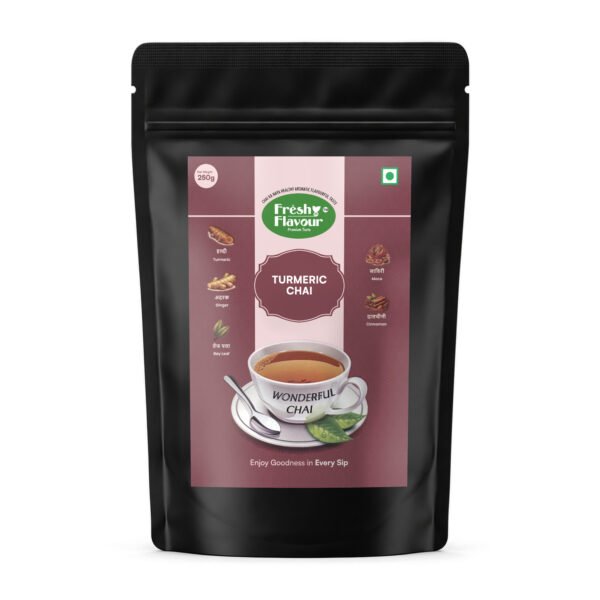
Turmeric CTC Chai
Turmeric chai patti online — haldi + ginger + cinnamon + Assam CTC for a golden, earthy cup.…
(incl. GST)
Shop now →Why Chai Became a Symbol of Indian Identity
Beyond the economics and logistics, chai became a symbol because it reflected Indian values and traditions. Indians transformed a British commodity into something uniquely ours by adding spices that had been part of Indian cooking and tradition for millennia. When you drink traditional chai with cardamom, ginger, and cinnamon, you’re tasting Ayurveda, ancient trade routes, and centuries of Indian wisdom.
The spices used in chai—elaichi (cardamom), adrak (ginger), dalchini (cinnamon), and jayfal (nutmeg)—aren’t arbitrary additions. They’re rooted in Indian kitchen and Ayurvedic traditions, prized for their aroma and the warmth they bring to a cup. When chai became India’s drink, it became a marriage of British tea leaves with Indian herbal traditions. This fusion created something that was authentically, unmistakably Indian.
For instance, Fresh n Flavour’s Turmeric CTC Chai embodies this philosophy perfectly. It combines premium CTC Black Tea with turmeric, cinnamon, ginger, mace, and bay leaf—each ingredient chosen for its flavor and its place in Indian kitchen tradition. This is how chai became not just a drink, but a daily ritual.
Moreover, chai became democratic in a way few beverages are. A billionaire and a street sweeper drink virtually identical chai from the same stall, served in the same small glass, for just a few rupees. This democratization made chai the drink of every Indian, transcending class, religion, caste, and region. It became the great leveler.
During India’s independence struggle, chai became the drink shared by freedom fighters. In secret meetings, revolutionaries plotted over cups of chai. In jail cells, freedom fighters sustained themselves with memories of their mother’s chai. The beverage became intertwined with India’s fight for self-determination, embedding it permanently in the national consciousness.
The Social Fabric: Chai Became the Glue of Communities
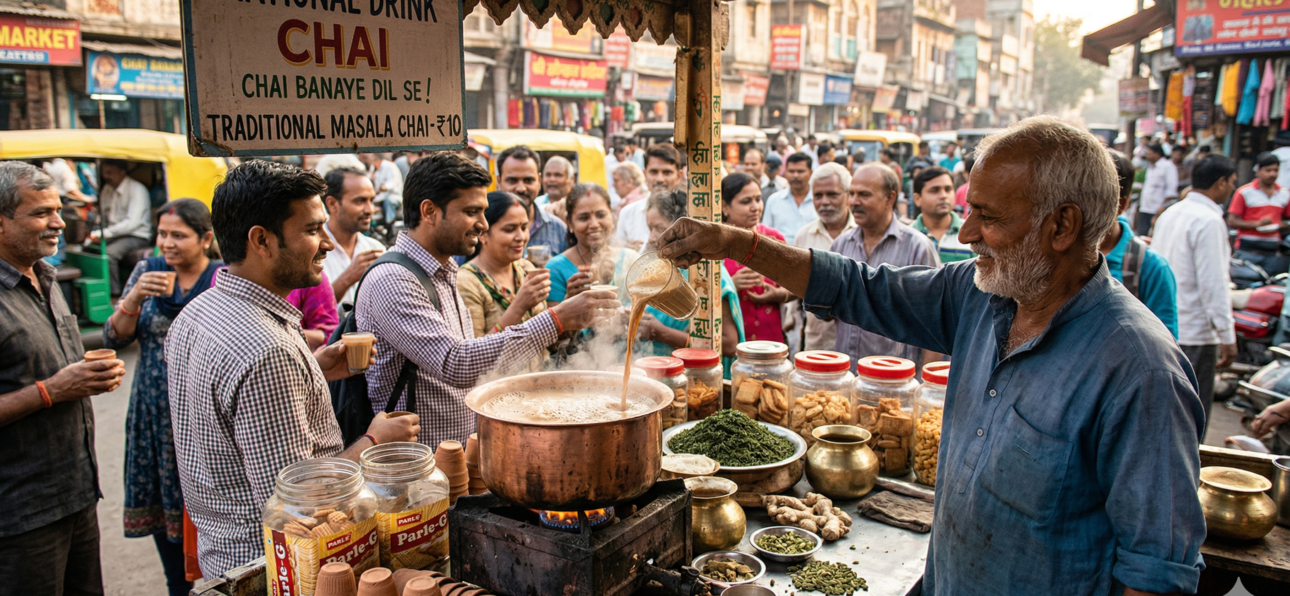
One of the most profound reasons chai became India’s national drink is its role in social bonding. The Indian chai stall—the humble tapri or chai ki dukaan—isn’t just a place to buy a beverage. It’s a social institution. It’s where business deals are negotiated, gossip is exchanged, political debates rage, and friendships are forged.
In every Indian city, town, and village, chai stalls serve as informal community centers. Office workers grab chai during morning break. Students huddle around stalls to discuss homework. Laborers pause for a break over steaming cups. Elderly men play chess while sipping chai. Young couples share stolen moments over shared cups. Chai became the connective tissue of Indian society.
The ritual of chai-making itself is deeply social. When someone visits your home in India, the first thing offered is chai. To refuse chai is considered rude; to accept it is to accept friendship and hospitality. Grandmothers teach daughters the perfect way to brew chai—the right water temperature, the precise boiling time, the correct ratio of milk and water. Chai became a language of love, passed down through generations.
During family gatherings, festivals, and celebrations, chai is omnipresent. At Diwali, families gather around chai. During Holi, after playing with colors, chai is a refreshing pause. Even in times of grief, chai brings people together—at funerals and mourning periods, chai provides comfort and a reason for community gathering. Chai became woven into the fabric of every major life event.
This social dimension created a powerful cultural force. When chai became a national drink, it wasn’t primarily because of its taste or caffeine content. It became national because of the social rituals and human connections built around it. The humble tea stall became India’s version of the European café—a democratic space where anyone could belong.
Today, brands like Fresh n Flavour recognize this sacred social role. By crafting premium, naturally-made chai blends—from their bestselling Delightful Chai to specialty blends like Ayurvedic CTC Chai—they’re honoring the tradition while elevating the experience. These aren’t mass-produced teas; they’re crafted blends that respect how chai became central to Indian identity.
Modern Era: How Chai Became Mainstream Across India
In the post-independence era (1947 onwards), chai became more than a drink—it became a marker of Indianness itself. As India industrialized and urbanized, chai consumption increased dramatically. Factory workers, office employees, and students all relied on chai for their daily breaks and social interaction. By the 1970s-80s, India was consuming more chai per capita than any other nation.
The government played a role in this transformation. India’s tea industry was promoted nationally through advertising and policy support. The “Chai is India” messaging became implicit in popular culture. Bollywood films featured iconic chai scenes. Hindi literature celebrated the chai tapri as a distinctly Indian institution. When chai became part of national cinema and literature, its status as the national drink was cemented.
The green April heat of early summer made chai even more relevant to Indian life. While summer might seem like the season for cold drinks, Indians adapted. Iced chai, cold brew chai, and lighter chai blends became popular during hot months. The versatility of chai meant chai became relevant year-round, in every season and climate. In summer 2026, as temperatures soar to 35-38°C across India, chai culture persists—just in cooler forms.
Technological advancement transformed how chai became accessible. Instant chai mixes, chai powders, and pre-packaged blends emerged in the 1990s-2000s. While traditional chai-wallas still dominate the streets, modern consumers can now prepare premium chai at home. This democratization of quality chai meant that chai became accessible not just to urban elites, but to every Indian household.
In recent years, chai became a global phenomenon. Indian chai shops appeared in London, New York, Sydney, and Toronto. International coffee chains added chai to their menus. Global café culture discovered chai’s spices—turmeric chai for its golden colour, tulsi chai for its herbal aroma, ginger chai for its warming bite. Chai became not just India’s national drink, but an international trend.
Here are the key reasons why chai became and remains India’s national drink:
- Affordability: Chai costs just 10-20 rupees, making it accessible to everyone regardless of income.
- Cultural authenticity: Indians transformed a British import into something unmistakably Indian through spices and preparation methods.
- Social bonding: Chai stalls serve as community gathering spaces where social hierarchies dissolve.
- Familiar flavours: Spices and herbs in chai match the flavours Indian kitchens have cooked with for generations.
- Historical significance: Chai became entangled with India’s independence struggle and national identity.
- Versatility: Chai adapts to every season, region, taste preference, and occasion.
- Ritualistic importance: Offering chai is an act of hospitality, love, and social acceptance in Indian culture.
Premium brands now celebrate this heritage authentically. Fresh n Flavour, based in Ahmedabad, Gujarat, crafts master-blended chai using real spices and the finest Assam and Dooars CTC tea leaves. By respecting how chai became central to Indian life through tradition and quality, Fresh n Flavour ensures that every sip carries the goodness of authentic chai culture.

Try it yourself
Delightful Chai
Delightful Chai Patti Online — Delightful blends Assam CTC with Darjeeling Second Flush, lemongrass & botanicals. The best…
(incl. GST)
Shop now →The Evolution of Chai: From Colonial Import to National Pride
The journey of how chai became India’s national drink is also the story of how India reclaimed, reimagined, and revolutionized a foreign product. The British brought tea to India for profit and export. But Indians took that tea, mixed it with milk, spices, and love, and created something that spoke to the Indian soul.
In 1834, when the first tea plants were cultivated in Assam, nobody could have predicted that chai became the beverage that would unite 1.4 billion Indians across regions, religions, languages, and economic classes. This transformation happened organically, through millions of individual choices—each time someone chose to add ginger instead of drinking plain tea, each time a mother taught her child the perfect chai brewing temperature, each time a friend invited another friend to share chai.
Chai became what it is today through the collective genius and creativity of ordinary Indians who took a colonial commodity and made it their own. In this process, Indians taught the world an important lesson: cultural identity isn’t something imposed from above; it’s created from below, through everyday choices, shared rituals, and authentic traditions.
Today, as you brew your next cup of chai—whether it’s a simple CTC blend or a specialty blend with unique spices—remember that you’re participating in a tradition over 150 years old. You’re drinking history, culture, and the very spirit of Indian resilience. Enjoy Goodness in Every Sip, as the saying goes, because every sip of chai carries within it the incredible story of how chai became India’s national drink.
Celebrating Chai Culture Today
As we navigate the modern world, chai became even more important as a touchstone of authentic Indian identity. In an era of globalization and homogenization, chai remains distinctly, unapologetically Indian. It’s a beverage that hasn’t been franchised into blandness, that hasn’t lost its soul through industrialization, that still carries the warmth of human connection.
The tea tapri—whether on a bustling Mumbai street or a quiet Bengal village—remains fundamentally unchanged. A chai-walla still boils water with tea leaves, adds milk, sweetens with sugar, and serves it in a small glass for a few rupees. The ritual hasn’t changed because the ritual is the point. It’s not about efficiency or profit margins; it’s about connection and community.
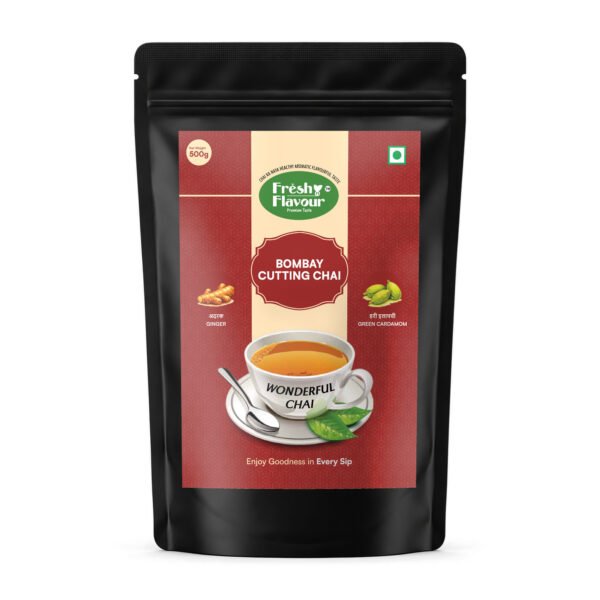
Premium chai brands like Fresh n Flavour elevate this tradition by offering carefully crafted blends that honor the heritage while meeting modern quality standards. Whether you prefer Bombay Cutting Chai for that authentic street-style experience or specialty wellness blends, quality chai remains an affordable luxury.
Chai became India’s national drink not through marketing campaigns or government mandates, but through the authentic choices of millions of Indians who valued its taste, affordability, and cultural significance. This organic growth into national prominence is perhaps the most beautiful aspect of chai’s story—it’s a beverage that earned its place in Indian hearts through genuine merit and deep cultural resonance.
Looking forward, as India continues to modernize and globalize, chai will likely remain a constant—a living link to our heritage, a daily ritual that grounds us in our identity, and a reminder that sometimes the most powerful things in life are also the simplest. Chai became India’s national drink because it perfectly captures what India is: diverse, adaptable, flavorful, warm, and utterly irreplaceable.
Frequently Asked Questions
When did chai become India’s most popular drink?
Chai gradually became India’s most popular drink from the late 1800s through the early 20th century, with the biggest surge following India’s independence in 1947. By the 1960s-1970s, chai had become ubiquitous across all of Indian society. The British established tea gardens in the 1830s, but it took until independence for Indians to fully claim chai as their own national beverage.
Why did Indians add spices to chai when it became their drink?
Indians added spices like cardamom, ginger, cinnamon, and nutmeg because these were already integral to Indian food culture and home kitchens. Rather than drinking plain tea like the British, Indians transformed it into something that aligned with traditional Indian cooking and flavor preferences. This made chai authentically Indian and gave it a taste of its own.
How did chai became a symbol of Indian identity?
Chai became symbolic of Indian identity because it represented the successful transformation of a British import into something distinctly Indian. During India’s independence movement, supporting Indian tea became patriotic. Freedom fighters gathered over chai, workers drank it as a badge of Indian identity, and it eventually became the democratic drink of all Indians regardless of class or background.
What role did chai play in India’s independence movement?
Chai became central to independence struggle through its role as a gathering place and shared ritual. Revolutionaries met at chai stalls to plan activities, workers discussed their rights over chai, and the beverage became symbolically linked to Indian nationalism and rejection of British imports. The humble tapri became an unofficial headquarters of independence sentiment.
How did chai became affordable for all Indians?
Chai became affordable because British tea plantations in India produced massive quantities of tea at low cost. Rail networks made tea accessible to remote areas. Entrepreneurs established countless small tea stalls serving chai for minimal prices. Unlike other beverages, chai required no expensive equipment—just hot water, tea leaves, milk, and spices. This simplicity made it the drink of the masses.
🍵 Try Fresh n Flavour’s Delightful Chai
Experience the smooth, perfectly-balanced blend of premium Assam CTC with lemongrass, spearmint, green cardamom, and nutmeg. This bestseller celebrates the essence of Indian chai tradition with natural ingredients that deliver incredible flavor in every cup.
Shop Now →Shop the blends in this guide
Frequently Asked Questions
Try it yourself
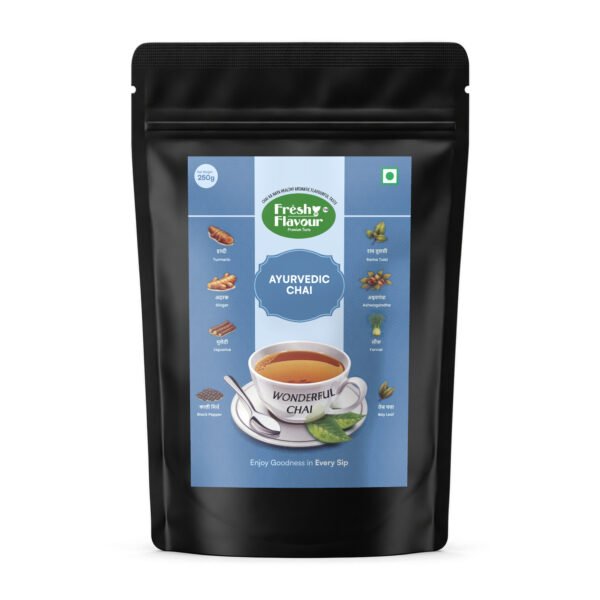
Ayurvedic CTC Chai
★★★★★ (2)Ayurvedic chai patti online — 9 traditional ayurvedic herbs blended with Assam CTC for a bold, aromatic cup.…
(incl. GST)
Shop now →