

Table of Contents
The chai wallah is India’s most iconic entrepreneur—a figure woven into the fabric of Indian society, culture, and business history. From bustling railway stations to quiet street corners, the chai wallah has been the heartbeat of communities, serving not just tea but stories, connections, and dreams. In April 2026, as temperatures soar across India and everyone seeks that perfect cup of hot or iced chai, it’s the perfect moment to celebrate the remarkable journey of India’s beloved chai wallah and understand how these humble tea entrepreneurs built empires from their small stalls.
The chai wallah represents something uniquely Indian—a perfect blend of entrepreneurship, resilience, and community spirit. Whether it’s a chai wallah at a railway platform serving hundreds daily or a neighborhood tea vendor who knows every customer’s name and preference, these entrepreneurs have mastered the art of business while maintaining their soul. Their story is one of innovation, customer loyalty, and the power of a simple, well-made cup of chai. Let’s explore how the chai wallah became India’s most beloved business figure and what makes their model so incredibly successful.
Who Is a Chai Wallah and Why They Matter
A chai wallah is far more than someone who sells tea. The term itself—derived from the Hindi word “wallah,” meaning a person engaged in a particular occupation—represents a unique entrepreneurial spirit that has been central to Indian commerce for over a century. A chai wallah operates with minimal capital, maximum hustle, and an intimate understanding of their customer base.
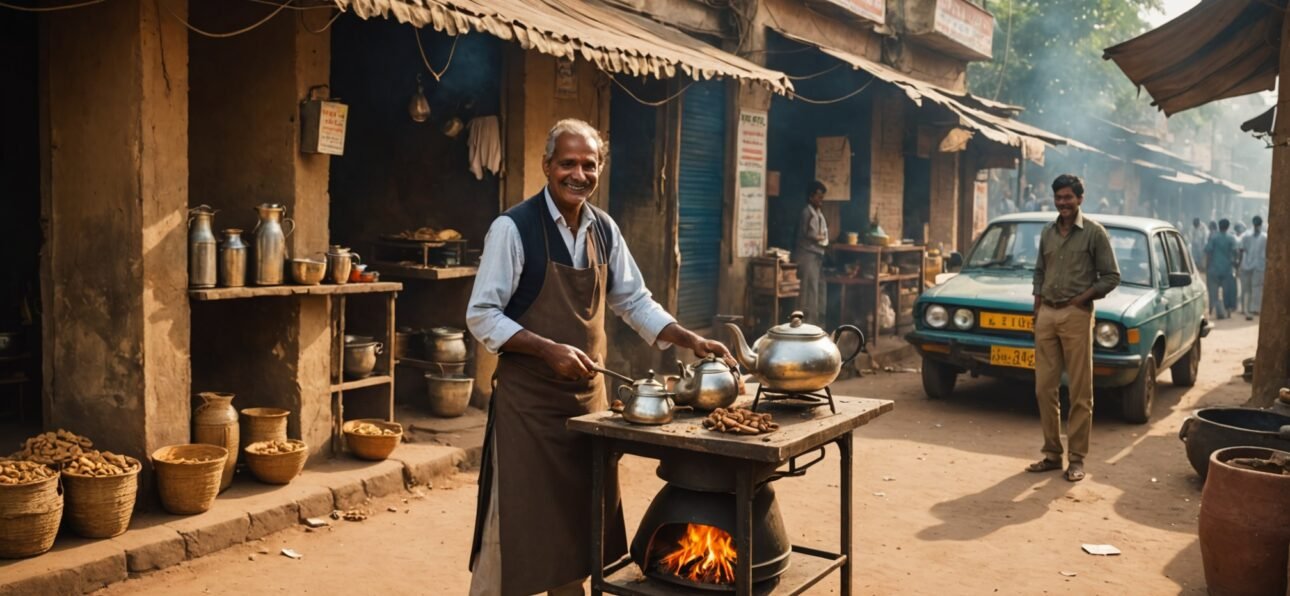
The traditional chai wallah setup is beautifully simple: a small stall or cart equipped with a clay stove (angithi), a large kettle (handi), small glasses, and raw ingredients—CTC tea leaves, milk, sugar, and spices like ginger, cardamom, and cloves. Yet this simplicity masks a sophisticated understanding of business fundamentals. The chai wallah knows their margins to the paisa, understands customer psychology, and has built loyalty through consistency and quality.
Why does the chai wallah matter? Because they represent the grassroots of Indian entrepreneurship. According to Wikipedia’s article on Indian tea culture, the chai wallah has shaped how India consumes tea—moving it from a luxury beverage to an essential social ritual accessible to all income levels. The chai wallah isn’t just selling chai; they’re selling a sense of belonging, a moment of respite, and a connection to something larger than themselves.
In today’s digital age, the chai wallah remains relevant because they’ve adapted without losing their essence. Some have moved online, some have expanded to multiple stalls, but the core philosophy remains unchanged: quality chai, fair prices, and genuine human connection. That’s why, even as coffee chains and bubble tea shops proliferate, the chai wallah continues to thrive.
The Chai Wallah Business Model: From Rupees to Riches
The chai wallah business model is a masterclass in lean entrepreneurship. With an initial investment of just ₹2,000–₹10,000, a chai wallah can start operations. This low barrier to entry is revolutionary—it’s why the chai wallah model has created more self-made entrepreneurs than almost any other street business in India.
Let’s break down how the chai wallah creates profitability:
- Cost Control: A chai wallah buys tea leaves in bulk at wholesale rates (often ₹40–₹80 per 500g), milk at ₹25–₹35 per liter, and spices in small quantities. Each cup costs approximately ₹3–₹5 to prepare.
- Price Strategy: A chai wallah sells standard chai at ₹10–₹20 per cup, generating a 60–80% margin on each sale. This exceptional markup is possible because of low overhead and no middlemen.
- Volume Advantage: A successful chai wallah serves 100–300 customers daily, translating to ₹1,000–₹6,000 in daily revenue. Annual profit can exceed ₹3–₹5 lakhs—entirely tax-free for many.
- Zero Wastage: The chai wallah philosophy embraces sustainability. Tea leaves become compost, hot water gets recycled for rinsing glasses, and every rupee is accounted for.
What makes the chai wallah business model so resilient is its scalability without losing identity. A successful chai wallah might expand to two or three stalls, hire family members or trusted employees, and grow their enterprise while maintaining the personalized touch that made them successful. This is why you see successful chai wallahs eventually opening small cafes or branded outlets—they’ve learned the fundamentals of business from their humble stall.
The chai wallah also pioneered concepts that modern startups now copy: customer lifetime value, brand building through consistency, and community engagement. Before “loyalty programs” were a thing, the chai wallah was offering free chai to regular customers during festivals, knowing that loyalty pays dividends in the long run.
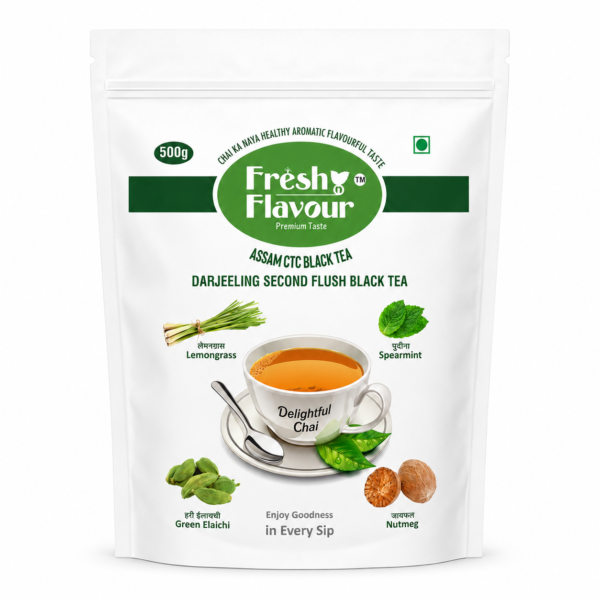
Try it yourself
Delightful Chai
Delightful Chai Patti Online — Delightful blends Assam CTC with Darjeeling Second Flush, lemongrass & botanicals. The best…
(incl. GST)
Shop now →5 Secrets Behind the Chai Wallah Success Story
What separates a struggling chai vendor from a wildly successful chai wallah? It comes down to five core secrets that every entrepreneur—not just those in the tea business—can learn from.
Secret 1: The Chai Wallah Never Compromises on Quality
The first secret of a successful chai wallah is unwavering commitment to quality. A chai wallah might be operating on thin margins, but they’ll never use stale tea, low-quality milk, or artificial spices. This principle is why premium brands like Fresh n Flavour resonate so deeply—they understand that Indian chai drinkers recognize quality immediately. Fresh n Flavour’s Delightful Chai captures this same spirit that the chai wallah has perfected—using only premium Assam and Dooars CTC Black Tea with real spices, never artificial flavors.
A chai wallah knows that if a customer sips subpar chai even once, they’ll go elsewhere. But consistent quality builds an unbreakable bond. The chai wallah who invests in good tea leaves, unadulterated milk, and fresh spices will always outearn the one cutting corners. This isn’t just philosophy—it’s tested business strategy that transforms a chai wallah from forgettable to legendary.
Secret 2: The Chai Wallah Builds Relationships, Not Just Transactions
A chai wallah succeeds because they know their customers’ names, preferences, families, and dreams. The chai wallah becomes a confidant, a storyteller, a shoulder to lean on. This emotional connection creates a moat that no competitor can breach. Regular customers don’t just come for chai—they come for the chai wallah.
This relationship-building is evident in how chai is prepared. A chai wallah might add extra ginger for a customer who likes it strong, reduce sugar for a regular who takes it light, or offer a free cup to someone going through hardship. The chai wallah understands that you’re not selling tea—you’re selling comfort, care, and community. Modern businesses call this “customer experience.” The chai wallah has been doing it for generations.
Secret 3: The Chai Wallah Embraces Consistency and Ritual
Every successful chai wallah understands that people crave consistency. You know exactly what you’ll get from “your” chai wallah—the same brews, the same small talk, the same warmth. This predictability is valuable. Humans are creatures of habit, and a chai wallah who maintains consistency becomes a ritual in customers’ daily lives.
A chai wallah wakes up at 4 AM, sets up their stall by 6 AM, and is ready to serve the morning rush. This reliability means early-morning commuters know they can count on their chai wallah before boarding a train. This ritual creates emotional attachment stronger than any marketing campaign.
Secret 4: The Chai Wallah Understands Seasonality and Adaptation
In April 2026, as temperatures soar to 35–38°C across India, a smart chai wallah isn’t just selling hot chai. They’re offering iced chai, nimbu pani variations, and chilled herbal infusions. The chai wallah who adapts to seasons survives and thrives. In winter, masala chai becomes more robust; in summer, lighter blends with lemongrass gain popularity.
This seasonal adaptability is why Fresh n Flavour offers diverse blends like their Tulsi Ginger Chai—a warming, aromatic cup for transitional seasons. A chai wallah recognizes that different seasons demand different chai profiles. They respond to market signals faster than any large company.
Secret 5: The Chai Wallah Leverages Word-of-Mouth and Community
A chai wallah doesn’t need social media ads because their customers are their marketing department. The chai wallah who serves every customer exceptionally creates brand ambassadors. One person recommends the chai wallah to a friend, who tells a colleague, and suddenly, the chai wallah‘s stall is overflowing.
In Indian culture, chai conversations are how recommendations happen. You sit with a friend, sip chai, and say, “There’s this incredible chai wallah near the station—their ginger chai is unmatched.” This organic, word-of-mouth marketing is why some chai wallahs become legends while others remain invisible. The successful chai wallah understands that every cup is a marketing opportunity.
The Chai Wallah and Indian Tea Culture
The chai wallah is inseparable from Indian tea culture. Before the chai wallah emerged as a figure in the late 1800s and early 1900s, tea was primarily a household beverage consumed by the affluent. The chai wallah democratized tea—making it accessible, affordable, and central to Indian social life.
Walk through any Indian city today, and the chai wallah remains the pulse of urban and rural India alike. Railway stations, bus terminals, street corners, parks—everywhere you find crowds, you find a chai wallah. This ubiquity isn’t accidental. The chai wallah identified tea as a solution to a real human need: a moment of respite, connection, and warmth.
The chai wallah culture has also influenced how chai is talked about and appreciated. Terms like “tapri chai” (tea shop chai), “cutting chai” (half-cup served to two people), and “adrak wali chai” (ginger chai) all originated from chai wallah culture. These linguistic markers show how deeply the chai wallah has shaped Indian identity.
Moreover, the chai wallah has been an informal keeper of Indian tea traditions. When large tea companies started using artificial flavors and inferior leaves, the chai wallah continued using real spices and quality CTC tea leaves. This commitment to authenticity is why today, when premium chai brands like Fresh n Flavour emphasize real spices and “master-crafted CTC blends,” they’re actually returning to the standards that the chai wallah never abandoned. The chai wallah philosophy is: “Enjoy Goodness in Every Sip.”
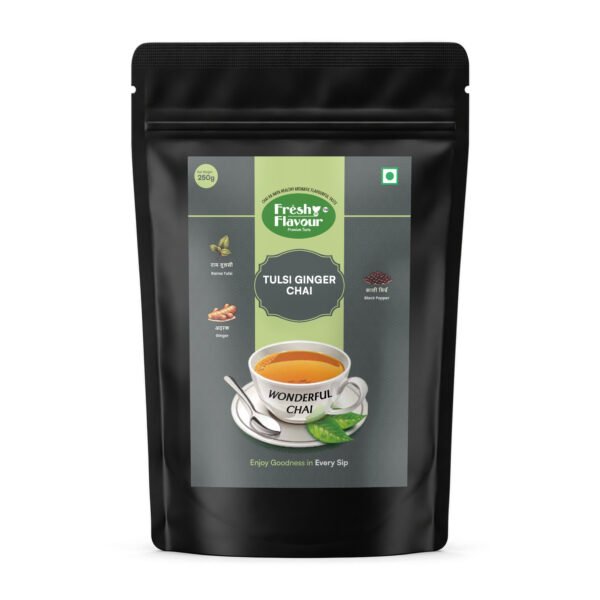
Try it yourself
Tulsi Ginger CTC Chai
★★★★★ (1)Tulsi Ginger chai patti online — holy basil + ginger + Assam CTC for a bright, peppery cup.…
(incl. GST)
Shop now →Modern Chai Wallah: Evolution in the Digital Age
As we enter 2026, the traditional chai wallah model is evolving while maintaining its soul. Some chai wallahs have embraced technology, accepting UPI payments alongside cash. Others have moved to online platforms, taking pre-orders and home deliveries. Yet the most successful modern chai wallah understands that technology is a tool, not the core business.
The modern chai wallah recognizes that consistency and quality remain paramount. They’re experimenting with new blends, exploring premium tea options, and educating customers about chai. A chai wallah in 2026 might recommend a Chocolate Chai to a customer seeking something different, or suggest a Rose Mulethi Chai for its floral, gently sweet liquorice notes. The modern chai wallah is becoming a chai sommelier.
Franchising has also emerged as a model for successful chai wallahs. Some have built brands around their unique chai recipes and expanded across cities. Yet even as they scale, the best modern chai wallahs maintain the personal touch that made them successful. They’re not corporate chains—they’re still chai wallahs at heart, just operating with more reach.
The pandemic of 2020-2021 tested the chai wallah model severely, but many adapted brilliantly. They started delivering chai in insulated containers, offered contactless payment, and became essential services in their neighborhoods. This resilience proves that the chai wallah isn’t a relic of the past—they’re a blueprint for sustainable, resilient entrepreneurship.
As summer temperatures peak in April 2026, the modern chai wallah is experimenting with cold brew chai, iced masala chai, and summer-specific blends. They’re understanding that the chai wallah model isn’t just about hot tea—it’s about understanding seasonal needs and delivering solutions. This adaptability is why the chai wallah will continue thriving even as India modernizes.
The chai wallah also represents an informal education system. Countless entrepreneurs have learned business fundamentals by working as apprentices to successful chai wallahs. The chai wallah teaches inventory management, pricing strategy, customer service, and resilience—all without a formal MBA. This educational impact extends the chai wallah‘s influence far beyond tea sales.
The Chai Wallah as Cultural Icon
Beyond business, the chai wallah has become a cultural icon. Indian cinema, literature, and art celebrate the chai wallah as a symbol of authenticity, wisdom, and grassroots strength. The chai wallah in films often dispenses philosophy along with chai—they understand life’s complexities and humanity’s needs. This cultural respect elevates the chai wallah beyond merchant to sage.
This cultural status translates to business advantage. Customers visit a chai wallah not just for tea but to be part of something authentic and real. In an era of mass production and automation, the chai wallah represents handcrafted excellence. They’re doing what modern entrepreneurs aspire to: building a brand based on quality, authenticity, and human connection.
Fresh n Flavour embodies this same philosophy. By emphasizing “master-crafted CTC chai blends” and real spices, they’re channeling the chai wallah spirit into premium packaging. They understand that consumers today crave the authenticity and care that the chai wallah has always provided—just with the convenience of home delivery.
Lessons Every Entrepreneur Can Learn from the Chai Wallah
The chai wallah success story offers universal entrepreneurial lessons:
- Start Small, Think Big: The chai wallah begins with minimal capital but maximum ambition. Scale comes from excellence, not capital.
- Know Your Customer: The chai wallah doesn’t target demographics—they know individuals, their preferences, their stories.
- Quality Over Margin: A chai wallah could increase margins by using inferior tea, but they don’t. Long-term loyalty beats short-term profit.
- Adapt or Perish: The chai wallah who thrives is the one experimenting with new blends, responding to seasonal shifts, and listening to customer feedback.
- Build Community: The chai wallah creates gathering spaces. Business succeeds when you’re solving for belonging, not just consumption.
These lessons remain valid whether you’re running a tea stall or a tech startup. The chai wallah has mastered the fundamentals of business—and that’s why they’re India’s most beloved entrepreneur.
Frequently Asked Questions
What does a chai wallah earn on average?
A successful chai wallah can earn ₹1,000–₹6,000 daily depending on location and foot traffic. This translates to annual profits of ₹3–₹5 lakhs or more. High-traffic locations like railway stations can yield even higher revenues. The chai wallah business model’s profitability comes from high margins (60–80%) and low overhead costs.
How is a chai wallah different from a cafe owner?
A chai wallah operates with minimal investment, personal presence, and deep community connections. They serve chai from a stall or cart and know customers individually. A cafe owner runs a formal establishment with higher overheads, diversified offerings, and often mass-market positioning. The chai wallah is intimate and authentic; the cafe is professional and scalable. Both models work, but they serve different needs.
Can a chai wallah business be scaled or franchised?
Yes, many successful chai wallahs have scaled by opening multiple stalls, hiring staff, or creating brands around their signature chai recipes. Some have franchised their model across cities. The key is maintaining the quality and personal touch that made the original chai wallah successful. Scaling works best when the chai wallah becomes a brand, not just a person.
What role does the chai wallah play in Indian culture?
The chai wallah is central to Indian social and cultural life. They’ve democratized tea consumption, created spaces for community gathering, and influenced how Indians talk about and appreciate chai. The chai wallah represents authenticity, wisdom, and grassroots entrepreneurship. They’re celebrated in cinema, literature, and everyday conversations as cultural icons who embody Indian values.
How has the chai wallah business evolved in the digital age?
Modern chai wallahs are adapting by accepting digital payments, exploring online orders, and experimenting with premium blends. Yet successful chai wallahs maintain personal connections and quality standards. Some have become chai sommeliers, educating customers about different chai profiles. The chai wallah remains relevant because they’ve learned that technology enhances but doesn’t replace the human touch that makes them special.
🍵 Experience Premium Chai Like a Chai Wallah
Discover master-crafted CTC chai blends made with real spices and herbs. Fresh n Flavour brings the authentic chai wallah experience to your home—quality, consistency, and goodness in every sip.
Shop Now →Shop the blends in this guide
Frequently Asked Questions
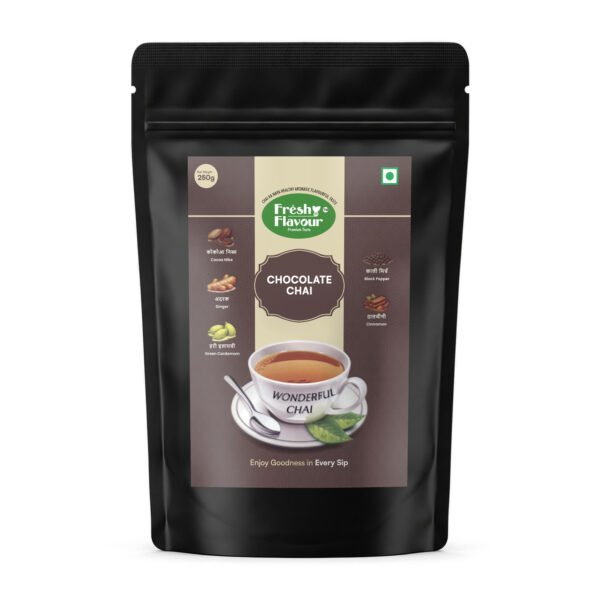
Try it yourself
Chocolate CTC Chai
Chocolate chai patti online — where Assam CTC meets cocoa nibs & chocolate extract. A premium chai patti…
(incl. GST)
Shop now →