

Table of Contents
When you brew a cup of chai on a warm April morning, the last thing on your mind should be whether your tea is safe to drink. But in India’s bustling chai market, the FSSAI licence number on a pack tells you which business stands behind the tea. Whether you’re sipping a light blend on a scorching summer day or enjoying a stronger kadak chai at your neighbourhood tapri, an FSSAI licence covers the business that made or sells the tea under India’s food safety law. It is not a sign that FSSAI has tested or approved the tea in your cup.
As chai lovers, we deserve to know that what we’re drinking is safe and made with genuine care. That’s why it helps to understand what a brand’s FSSAI licence does and does not tell you. In this guide, we’ll explain what the licence is, how the food safety rules behind it apply to chai makers, why it matters to you as a chai drinker, and how brands like Fresh n Flavour print licence numbers on every pack. Let’s look at the five food safety standards that an FSSAI licence holder must follow, and what to check on your pack.
What Is an FSSAI Licence and Why Does It Matter?
The Food Safety and Standards Authority of India (FSSAI) is a statutory body established under the Ministry of Health and Family Welfare. It sets India’s food safety standards, from production to packaging, and it licenses or registers the businesses that make and sell food. When a chai brand displays an FSSAI licence, it means the business behind the pack is licensed under India’s food safety law. FSSAI does not test or approve individual products or batches; the licence is for the business, not the tea.
For chai and tea brands, an FSSAI licence isn’t optional — it’s mandatory. Any business making or selling packaged chai in India must hold one (or an FSSAI registration) and follow FSSAI’s rules on contaminants, adulterants and additives. Think of it as a licence to trade in food, not a seal of approval on each pack. Without it, a brand has no legal right to sell chai commercially in India.
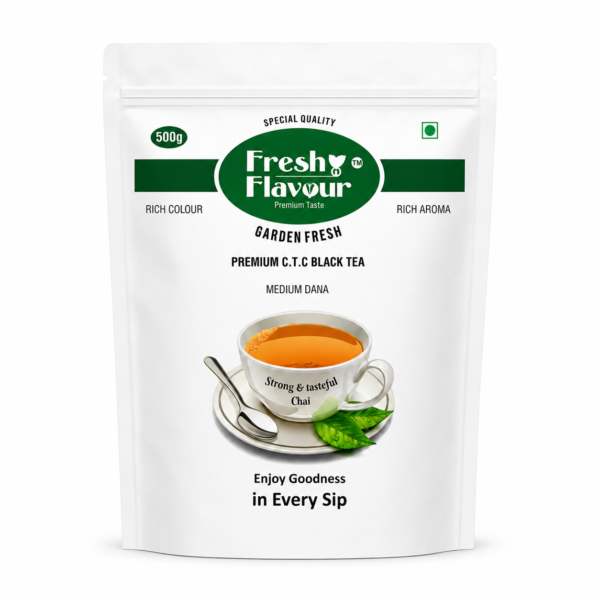
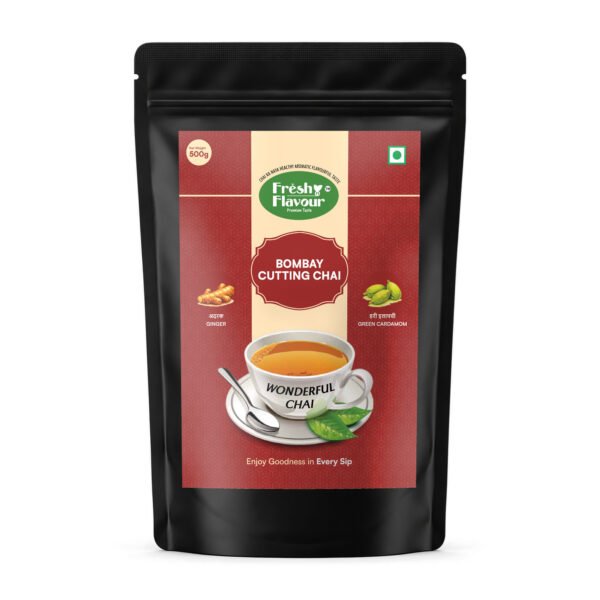
A printed FSSAI licence number is also about transparency: it lets you trace a pack back to a business. When Fresh n Flavour prints FSSAI licence numbers on every pack, it’s telling you who made and who sells the tea, and that both businesses are licensed under India’s food safety law. FSSAI does not test each batch, so it is the maker’s job to make sure that every pack of their master-crafted chai blends — whether it’s their beloved Delightful Chai or their premium Assam Royal Chai — meets the food safety standards.
How FSSAI Rules Apply to Chai Makers
FSSAI licence rules work in layers. First, a business needs its licence before it starts trading, and its facility must meet hygiene, storage and handling standards that cover equipment, storage containers and every processing step. The authority can inspect the facility for proper pest control, clean water sources, waste management systems and trained staff.
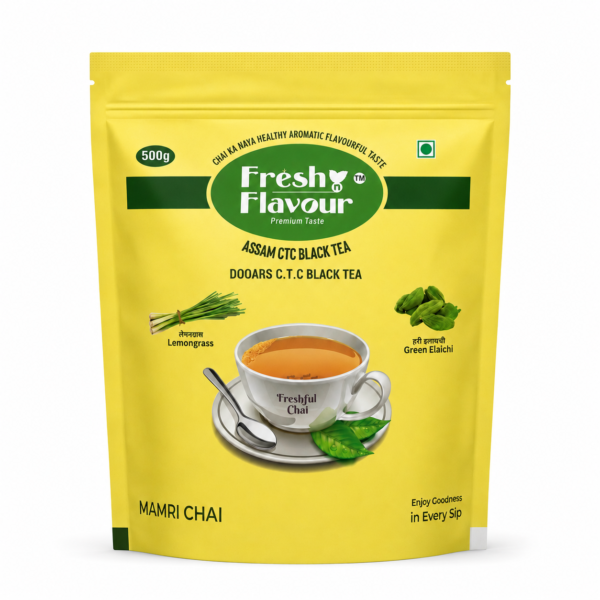
Second, an FSSAI licence holder must keep records of its ingredients. For a chai maker, this means every lot of Assam CTC black tea, every bundle of dried lemongrass and every spice like green elaichi or jayfal should come from known suppliers and be traceable. This matters because it guards against the use of contaminated or adulterated raw materials.
Third, there’s the labelling requirement. Every FSSAI licence holder must list all ingredients clearly on the packaging, along with allergen warnings where they apply. This means a licensed chai pack should tell you what’s inside — no hidden additives, no undisclosed ingredients. This transparency is as useful to you as the licence number itself.
Finally, an FSSAI licence is an ongoing responsibility, not a one-time approval. The licence holder must make sure its chai stays within FSSAI limits for microbes, pesticide residues and heavy metals throughout its shelf life, which is why careful makers test regularly. FSSAI does not test each batch on its behalf.
Try it yourself
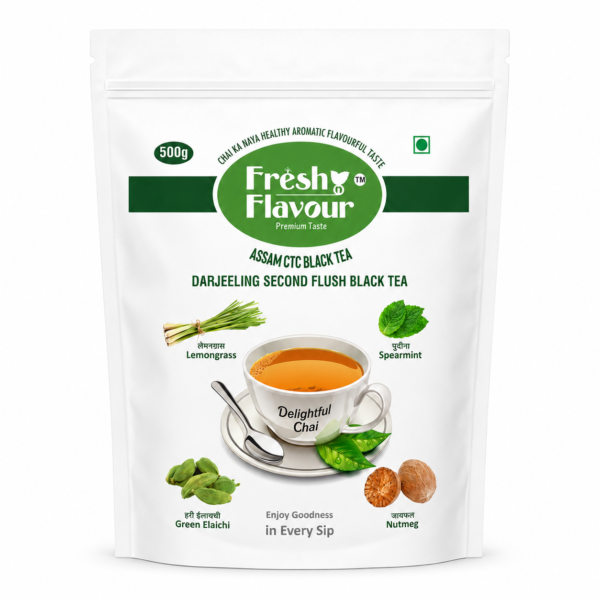
Delightful Chai
Delightful Chai Patti Online — Delightful blends Assam CTC with Darjeeling Second Flush, lemongrass & botanicals. The best…
(incl. GST)
Shop now →5 Food Safety Standards Under FSSAI Rules
Understanding the five core food safety standards that come with an FSSAI licence helps you see what a licensed maker has signed up to, and why storage and ingredient quality still matter, especially in the hot summer season.
1. Microbial Safety and Pathogen Testing
One of the most important rules for an FSSAI licence holder is microbial safety. Bacteria like E. coli, Listeria, and Salmonella can contaminate tea leaves if not handled properly. An FSSAI licence holder is responsible for keeping these pathogens within FSSAI limits; FSSAI does not approve chai products one by one. This matters even more for blended chai, because multiple ingredients increase contamination risk. Brands like Fresh n Flavour work with FSSAI-licensed manufacturers, who are responsible for meeting these limits for the blends they make.
2. Pesticide Residue Limits
Tea leaves are crops, and crops can be exposed to pesticides. Every FSSAI licence holder must keep tea within the maximum residue limits (MRL) that FSSAI sets for pesticides. That applies to every lot of Assam and Dooars CTC tea used in a chai blend, and it is the maker, not FSSAI, who must check that pesticide levels stay within those limits. So the FSSAI licence-holder named on the pack is the one answerable for those limits; the number is not a lab report on your morning cup.
3. Heavy Metal and Contaminant Screening
Heavy metals like lead, cadmium, and arsenic can accumulate in tea leaves through soil contamination. FSSAI sets limits for these metals too, and every FSSAI licence holder must keep its tea within them. The licence number does not tell you any test result or anything about the tea garden; it tells you which business is responsible for meeting those limits.
4. Genuine Ingredients and Adulteration Prevention
Some sellers cut costs by adding fillers, artificial flavours, or cheaper ingredients. FSSAI rules forbid adulteration, and an FSSAI licence holder is responsible for selling food that matches its label. Spices like green elaichi, jayfal, and ginger must be the real spice, not synthetic imitations. For brands featuring herbal blends — like Tulsi Ginger Chai or Turmeric Chai — FSSAI licence holders must sell what the label says, so the tulsi should be genuine Rama Tulsi and the turmeric unadulterated, not mixed with fillers or artificial colours.
5. Hygiene and Manufacturing Standards
FSSAI licence rules include Good Manufacturing Practices (GMP) that the licence holder must follow. Manufacturing facilities need controlled temperature and humidity, separate areas for different processing steps, and proper hand-washing and hygiene routines for workers. This guards against cross-contamination. Storage matters at home too: when summer heat peaks in late April and May, keep your chai sealed and dry and follow the pack’s storage instructions (a separate matter from the FSSAI licence, which is about the business that made and packed the tea).
The FSSAI Licences Behind a Chai Brand
Not every chai brand makes its own tea, so a pack can carry more than one FSSAI licence: the brand’s and the maker’s. Take Fresh n Flavour as an example. Its legal entity, Aarvee Multibiz Co., is the marketer and holds its own FSSAI licence. The packs are made by FSSAI-licensed manufacturers each under its own FSSAI licence. The marketer’s FSSAI licence tells you who sells the tea; the manufacturer’s tells you who made it.
When Fresh n Flavour says its “master-crafted CTC chai blends” are made with real spices and herbs by FSSAI-licensed manufacturers, the licence part is something you can check for yourself. The FSSAI licence does not judge the recipe, the flavour or where the tea leaves were grown; for those, read the ingredient list and taste the chai.
Alongside Fresh n Flavour‘s FSSAI licence number, here’s what to read on a chai label:
- Ingredient list: Every tea, spice and herb in the blend, named on the pack
- Manufacturer: The name and address of the maker, with its own licence number
- Marketer: The brand that sells the tea; for Fresh n Flavour, that is Aarvee Multibiz Co., with its own FSSAI licence
- Dates: The packed-on date and the date the tea should be used by
- Packaging: A sealed pack, with no damage, moisture or signs of tampering
Read together, these lines tell you far more about your cup of chai — whether you’re enjoying it iced on a sweltering April afternoon or hot on a cooler evening — than the FSSAI licence number can on its own.
Your Chai Safety Checklist
As a smart chai consumer, here’s how you can check an FSSAI licence number and the label around it before you buy:
Before You Buy
- Check the packaging: Look for the FSSAI logo and the 14-digit licence number (registration numbers are usually marked “FSSAI Reg. No.:”)
- Read the ingredients list: FSSAI licence rules require every ingredient to be listed. If you see vague terms like “spice blend” without details, it’s a red flag
- Verify the manufacturer: FSSAI licence numbers are tied to one business and its premises. Look the number up on the FoSCoS licence search on FSSAI’s website and check that the name and address match the pack
- Look for allergen warnings: The label should clearly state if the chai contains allergens like nuts (important for blends like Shahi Kesar Chai that contain almonds and pistachios)
When You Receive Your Chai
- Inspect the package: FSSAI licence details can’t tell you how a pack was handled on the way to you, so check for any damage, moisture, or signs of tampering
- Check the dates: Look for the packed-on date and a clear “Best Before” or “Expiry” date
- Store properly: FSSAI licence rules cover how the tea is made and packed, not how it is kept at home. Follow the storage instructions on the pack to keep it in good condition
Read the Whole Label
When a chai brand proudly displays its FSSAI licence number, treat it as a starting point. It tells you which business is licensed and answerable under India’s food safety law. It does not mean a government authority has checked the safety or quality of every batch. For brands like Fresh n Flavour, FSSAI licence details are one part of the label; “Enjoy Goodness in Every Sip.” is a promise you judge in the cup.
Why Some Sellers Skip the Licence (And Why You Should Avoid Them)
Some small, unregistered chai sellers operate without an FSSAI licence, selling directly at markets or online with no licence number on the pack. They might be cheaper, but without an FSSAI licence, there’s no way to tell who is responsible for the tea or to trace it back to a business. You’re essentially trusting the seller’s word alone. For something you consume daily, a valid FSSAI licence or registration is non-negotiable.
Try it yourself
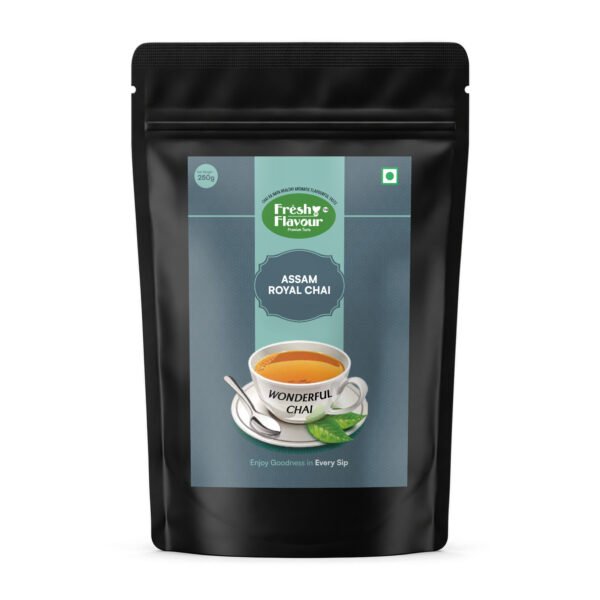
Assam Royal Chai
Assam chai patti online — Assam Royal is an all-Assam orthodox + CTC blend for bold, malty chai.…
(incl. GST)
Shop now →Where FSSAI Food Safety Standards Come From
FSSAI licence holders must follow rules that FSSAI bases on international food safety standards and research into food-borne illnesses and contamination. The authority updates its standards over time, based on scientific evidence and global best practices. You can read them in FSSAI’s official guidelines, which set limits and hygiene rules for tea and other foods; they do not mean that each tea product is tested or approved before it goes on sale.
For herbal and spiced chai blends like those from Fresh n Flavour, FSSAI licence holders have more to keep track of, because multiple ingredients mean multiple contamination risk points. It is the maker, not FSSAI, who should check:
- Each ingredient individually before blending
- The final blended product before packaging
- That the label matches what is inside the pack
- Storage conditions at the manufacturing facility
Checks like these are what give an FSSAI licence its meaning; the number itself is not a test result.
What an FSSAI Licence Does and Does Not Tell You
When a pack shows an FSSAI licence, you know the business behind it is licensed under India’s food safety law and must follow its rules on contaminants, adulteration and labelling. What it does not tell you is how the tea tastes, where the leaves were grown or whether a particular batch was tested. If you love the ginger and turmeric in traditional blends, or the tulsi in herbal chai, the ingredient list is where to check that they are in the pack. FSSAI licence rules cover food safety and labelling, not flavour.
This is why careful chai lovers read the whole label, not just the licence number. Whether it’s the Ayurvedic Chai with its nine traditional herbs or a simple Assam CTC blend, the FSSAI licence holder must sell exactly what the label lists, and the label is where you check it.
The Cost of Compliance
You might notice that chai from an FSSAI licence-holding business isn’t always the cheapest option next to loose tea from unregistered sellers. Running a licensed business, with documented ingredients and a full label, has its costs. When you buy Fresh n Flavour‘s blends, you are buying tea made by FSSAI-licensed manufacturers, in packs that carry the licence numbers and label details that FSSAI licence rules require.
Think of it as paying for accountability. You’re paying for a licensed maker and clear labelling with every pack. Over time, choosing chai from a licensed maker means you know who made it and what is going into every cup.
FSSAI Licence: A First Check Before You Buy Chai
FSSAI licence details on a pack are a first check, not a guarantee. They tell you that the business behind the chai is licensed by India’s food safety authority and must follow its standards for the tea leaves, the spices, the herbs and the manufacturing process. They do not mean FSSAI has tested your pack. For brands like Fresh n Flavour, FSSAI licence numbers printed on every pack show who sells the tea and who made it, and the ingredient list shows what went into the blend.
As you reach for your next cup — whether it’s a light, refreshing blend on a scorching summer afternoon or a warming, kadak chai on a cooler evening — look for that FSSAI licence number, then read the label around it: the ingredient list, the manufacturer’s name and address, and the dates. It’s a small mark on the package, and checking it along with the rest of the label is a smart habit for every chai lover in India.
Frequently Asked Questions
What exactly does an FSSAI licence mean for chai safety?
An FSSAI licence means the business that made the chai is licensed under India’s food safety law and must follow FSSAI rules on microbial safety, pesticide residues, heavy metals, hygiene and adulteration. The licence does not test or approve individual batches; the maker is responsible for making sure every batch meets those standards.
How can I check the FSSAI licence on a chai package?
Look for the FSSAI logo and the 14-digit licence number printed on the packaging (registration numbers are usually marked “FSSAI Reg. No.:”). You can search the number on the FoSCoS licence search on FSSAI’s website to see which business it belongs to. The complete ingredient list, the manufacturer’s name and address and the date marks should also be clearly printed.
Does the FSSAI licence matter more for blended chai than plain tea?
The licence rules are the same for both: any packaged chai, plain or blended, must come from an FSSAI-licensed or registered business. Blends ask more of the maker, because multiple ingredients increase the risk of contamination. Each ingredient — spices, herbs, tea leaves — should be checked before blending, so masala chai or herbal chai, which combine diverse ingredients, need closer checks than plain CTC tea.
Does an FSSAI licence mean the chai tastes good?
No. An FSSAI licence is about food safety rules, not taste preference. Taste comes down to the ingredients and the blending. Fresh n Flavour’s master-crafted blends are made by FSSAI-licensed manufacturers; their flavour comes from the tea, the real spices and herbs, and the blending.
What should I do if I find chai without an FSSAI licence number?
Avoid buying it. Packaged chai sold commercially must carry an FSSAI licence or registration number; without one, there’s no way to tell who made it or who is responsible for its quality. Report such products to local food safety authorities. Choose brands that print their FSSAI licence number on the pack, along with the ingredient list and the maker’s address.
🍵 Experience Hand-Blended Chai Excellence
Trust Fresh n Flavour’s master-crafted chai blends made with Assam & Dooars CTC leaves, hand-blended with real spices and herbs. Enjoy goodness in every sip.
Shop Our Chai →Shop the blends in this guide
Frequently Asked Questions
Try it yourself
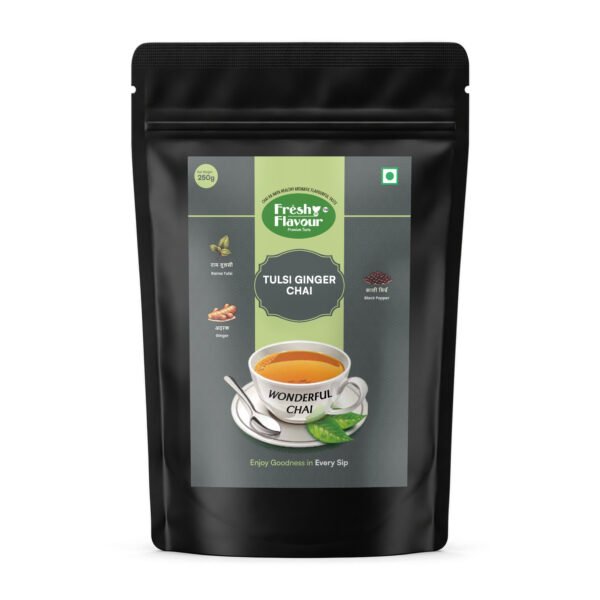
Tulsi Ginger CTC Chai
★★★★★ (1)Tulsi Ginger chai patti online — holy basil + ginger + Assam CTC for a bright, peppery cup.…
(incl. GST)
Shop now →