

Table of Contents
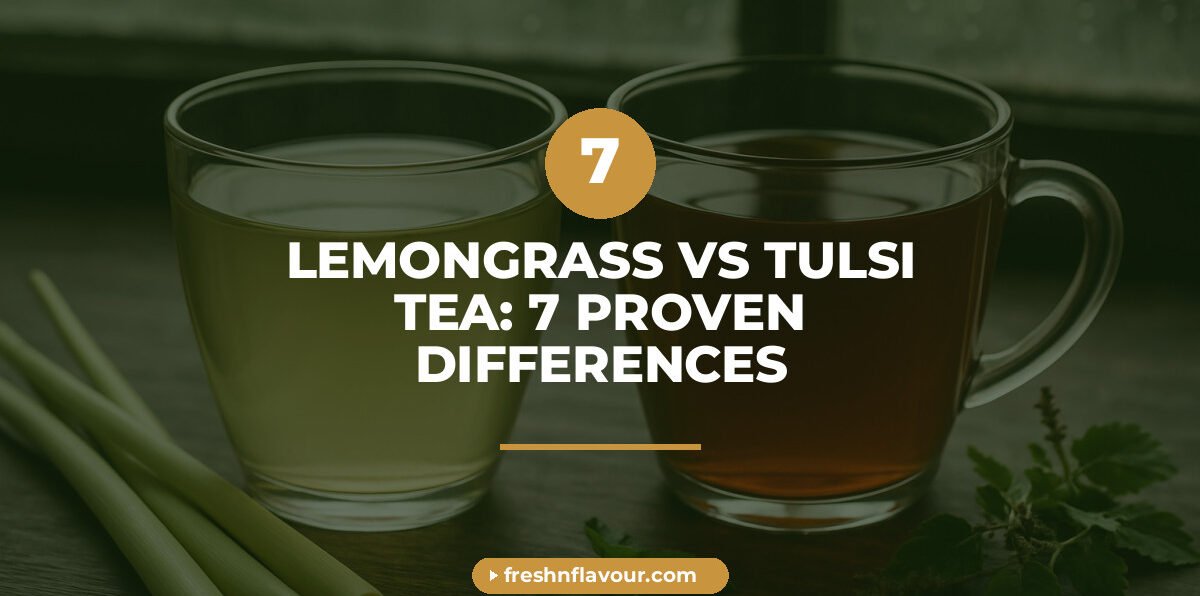
The lemongrass vs tulsi tea debate comes up in almost every Indian household during monsoon, when everyone wants something warm, comforting, and full of aroma. Both are ancient Indian botanicals, both make a fragrant cup, but they behave very differently in your chai. This guide breaks down the real difference so you can choose the right one for these rainy, cozy August evenings.
Looking for the chai itself? See our lemongrass chai patti: three blends, with free shipping across India.
At Fresh n Flavour, we hand-blend both ingredients into our chai recipes in small batches in Ahmedabad, so we get asked this question constantly by customers deciding between blends. Here is the honest, practical answer.
Lemongrass vs Tulsi Tea: What Is the Real Difference?
The core difference in lemongrass vs tulsi tea is flavour direction and traditional use: lemongrass brings a citrusy, cooling brightness suited to everyday refreshment, while Tulsi brings an earthy, peppery warmth long brewed in Indian homes during seasonal changes.
Botanically, They Are Worlds Apart
Lemongrass is a citrus-scented grass (Cymbopogon citratus) grown widely across South and Southeast Asia. Tulsi, or Holy Basil, belongs to the mint family and has been central to Ayurvedic households for centuries.
Sir J.D. Hooker’s botanical survey The Flora of British India (1872-1897) documented dozens of aromatic Indian herbs used in daily infusions, placing both grasses and basils firmly within India’s long tradition of herbal tea-drinking.
How Each One Behaves When Brewed With Milk Tea
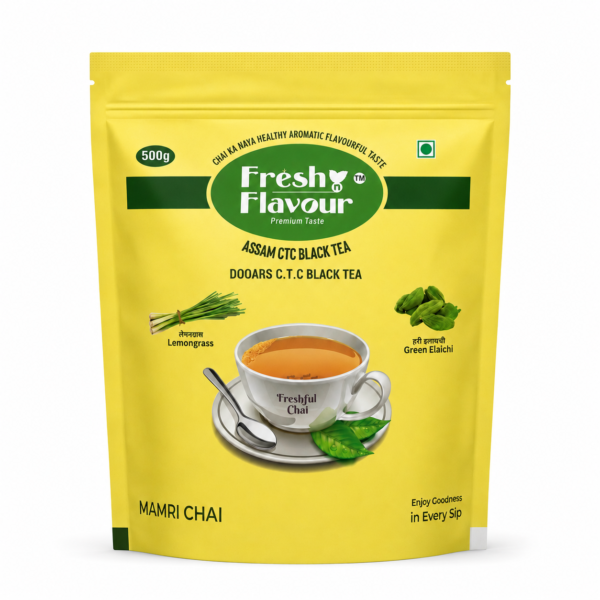
Lemongrass holds its citrus note even after a rolling boil with milk, which is why Fresh n Flavour uses it as a base flavour in blends like Freshful Chai. Tulsi, on the other hand, releases a slightly sharper, clove-like warmth that works best steeped gently rather than boiled hard.
Try it yourself
Freshful Chai
★★★★★ (17)Lemongrass chai patti — Premium chai patti online — Freshful blends Assam CTC with Dooars black tea, lemongrass…
(incl. GST)
Shop now →What Does Lemongrass Tea Taste Like?
Lemongrass tea tastes bright, citrusy and slightly sweet, with a cooling aftertaste similar to lemon zest but without the sourness. It pairs naturally with milk, cardamom and mint, making it a favourite for everyday masala chai across Gujarat and Maharashtra.
Why Lemongrass Works So Well in CTC Chai
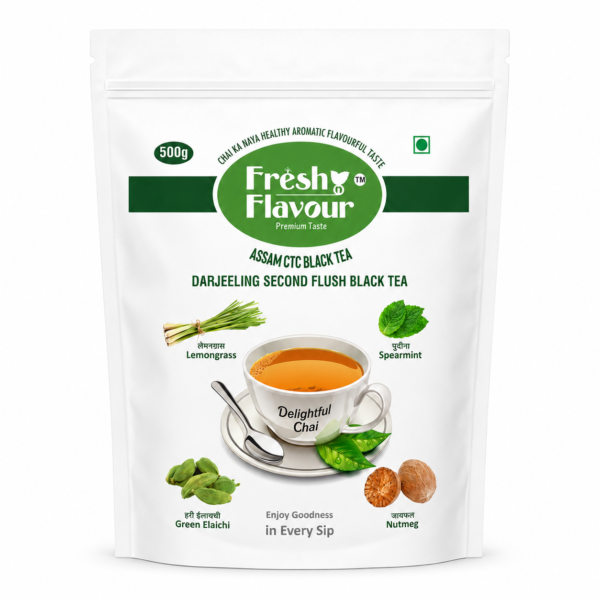
Lemongrass has a natural aromatic oil called citral, which stays stable during boiling. This is exactly why Fresh n Flavour’s Delightful Chai pairs it with green cardamom, mint and nutmeg — lemongrass, cardamom and mint buffer the acidity of the tea, so strong milk tea tastes smoother.
This acidity-free approach in Delightful Chai is one thing only a blender who controls the exact ratio can genuinely claim. It is not a flavour trick — it is a deliberate recipe decision made in our Ahmedabad kitchen.
Best Time of Day for Lemongrass Tea
Lemongrass chai suits mornings and post-lunch breaks. Its citrus brightness feels refreshing rather than heavy, which is why Freshful Chai, made with Mamri Dana cut Assam and Dooars CTC, lemongrass and cardamom, works beautifully as a 4 pm rain-watching cup.
What Does Tulsi Tea Taste Like?
Tulsi tea tastes peppery, slightly minty and warming, closer to a spice than a herb. It has a stronger, sharper herbal aroma than lemongrass, which is why it is usually blended with ginger or black pepper rather than drunk alone.
Tulsi’s Role in Traditional Indian Kitchens
Ram Tulsi has been a fixture of Indian courtyards for generations, and its warm, peppery leaves are a familiar addition to chai during weather changes — exactly the kind of continuous rain and humidity Ahmedabad and most of India see through August. Many families also brew it after heavy monsoon meals.
Fresh n Flavour includes Ram Tulsi in its Tulsi Ginger CTC Chai, pairing it with Ginger and Black Pepper for a sharper, more warming cup than a lemongrass blend.
Does Tulsi Tea Need Milk?
Tulsi tea is traditionally drunk without milk, closer to a kadha, though Indian households increasingly add milk for a gentler daily cup. It is a stronger, more assertive flavour than lemongrass and works best when someone wants a bold, peppery cup rather than a light refreshment.
Try it yourself
Delightful Chai
Delightful Chai Patti Online — Delightful blends Assam CTC with Darjeeling Second Flush, lemongrass & botanicals. The best…
(incl. GST)
Shop now →Lemongrass vs Tulsi Tea: Traditional Use Compared
In the lemongrass vs tulsi tea comparison, lemongrass brings a bright citrus lift for everyday refreshment, while tulsi brings a peppery warmth suited to rainy, cooler days — making them suited to different daily tastes rather than one being universally “better.”
A Side-by-Side Comparison Table
| Aspect | Lemongrass Tea | Tulsi Tea |
|---|---|---|
| Flavour profile | Citrusy, light, cooling | Peppery, earthy, warming |
| Traditional use | After-meal sipping, refreshment | Warming seasonal chai, rainy days |
| Best paired with | Cardamom, mint, nutmeg | Ginger, black pepper |
| Best time of day | Morning or afternoon | Evening or rainy days |
| Fresh n Flavour blend | Freshful Chai, Delightful Chai | Tulsi Ginger CTC Chai |
| With milk? | Yes, blends smoothly | Optional, traditionally black |
How Indian Kitchens See Both
In Indian kitchens, lemongrass is thought of as a light, cooling flavour and tulsi as a warming, peppery one. Neither is a medicine — both are simply part of a daily chai routine, much as The Indian Cookery Book (1880) described household spice blends being adjusted by season.
Reputable resources like the NCBI review on Ocimum sanctum (Tulsi) outline its long traditional standing in Indian herbal use; we share it as background reading, and in our chai we use tulsi for its peppery aroma.
Which One Should You Pick?
If you want a light, everyday refreshing cup for monsoon afternoons, choose lemongrass — start with Freshful Chai. If you want a warming cup on rainy-season evenings or before Raksha Bandhan family gatherings, tulsi ginger chai is the better fit.

If you find strong milk tea too harsh, pick Delightful Chai, an acidity-free blend that combines lemongrass with cardamom, mint and nutmeg specifically to soften that harsh edge. It is not the right choice if you prefer a strong, straight kadak cup without herbal notes — for that, Fresh n Flavour’s Strong & Tasteful Chai is a better match.
Tulsi is not ideal for someone who dislikes peppery, sharp herbal aromas in their evening cup. Lemongrass is not ideal if you want a deeply warming, spice-forward tea for cold, wet evenings. Neither is a “better” ingredient — they simply suit different daily tastes.
Whichever you choose, both reflect what Fresh n Flavour stands for: real whole botanicals, hand-blended in small batches, no artificial flavour — Enjoy Goodness in Every Sip.
Shop the blends in this guide
Frequently Asked Questions
Try it yourself
Delightful Chai
Delightful Chai Patti Online — Delightful blends Assam CTC with Darjeeling Second Flush, lemongrass & botanicals. The best…
(incl. GST)
Shop now →