

At a glance
Tea dust refers to the finest, smallest particle size produced during CTC (Crush, Tear, Curl) processing, giving a quick, strong infusion compared to whole-leaf orthodox tea. It is the standard base for most masala chai and everyday kadak chai across India.
- Identify tea dust: The best tea dust in India comes from a blend of Assam and Darjeeling gardens, has a consistent granule size, a deep reddish-brown colour, and no…
- CTC dust vs Mamri Dana vs leaf: CTC dust brews fastest and strongest, Mamri Dana offers a rounder granule with a smoother release, and leaf-style orthodox tea brews slower with a…
- Freshness: Freshness in tea dust depends on how the leaf was stored after processing, not just the printed date.
- Picking the right one: The right chai patti depends on your taste and routine, not just the label claiming to be the best tea dust in India.
If you are searching for the best tea dust in India, the real question is not which brand shouts loudest on the shelf — it is which pack actually gives you a strong, clean cup every single morning. Tea dust, often called CTC chai patti, is the backbone of most Indian households, and knowing what to check before buying saves you from weak, stale or overly bitter cups.
This guide breaks down grade, cut, blend and freshness so you can shop smarter. We will also look at how Fresh n Flavour approaches its chai patti differently from a plain, single-origin dust.
Mentioned in this guide
Delightful Chai Patti Online — Delightful blends Assam CTC with Darjeeling Second Flush, lemongrass & botanicals. The best…
250 g ₹450 · 500 g ₹750 ₹899
What Does Tea Dust Actually Mean?
How CTC Processing Creates Dust
During CTC processing, fresh tea leaves are crushed, torn and curled by rollers into small, dense granules. The smallest grade from this sieving process is called dust, prized for quick colour and strong body in milk.
This method was refined through decades of tea garden innovation in Assam. Harold H. Mann’s 1918 study of the early Assam tea industry documents how planters experimented with processing methods to suit the strong, milk-forward chai culture developing across India.
Why Dust Brews Faster Than Leaf Tea
Smaller particles have more surface area exposed to hot water, so dust releases colour and strength within two to three minutes. This is exactly why dust-grade Assam CTC Tea is the backbone of roadside and home-brewed chai.
- Dust grade: fastest brew, strongest colour, used in most kadak chai
- Fannings: slightly larger, common in tea bags
- Whole leaf CTC: slower brew, milder cup, used in premium blends
How Do You Identify the Best Tea Dust in India?
The best tea dust in India comes from a blend of Assam and Darjeeling gardens, has a consistent granule size, a deep reddish-brown colour, and no added colouring agents or excessive fannings mixed in with the dust.
Checking Leaf Origin
Assam leaves bring body and malty strength, while Darjeeling leaves add a lighter, aromatic edge. A blend of both, like in Delightful Chai, balances strength with aroma.
Single-origin dust can taste one-dimensional — either too harsh or too mild. Checking the pack for both Assam and Darjeeling Second Flush tells you the brand has thought about balance, not just cost.
Checking Granule Consistency
Open the pack and look at the particles. Uniform, small, dark granules suggest proper sieving. If you see a mix of large stems, dust and dull-coloured bits, the batch has likely been cut with lower-grade sweepings.
Checking for Whole Spices vs Flavouring
Some packs marketed as the best tea dust in India actually rely on synthetic flavouring sprayed onto the leaf. Look for packs that list real whole spices like Cardamom, ginger or nutmeg instead of vague “natural flavour” additions.
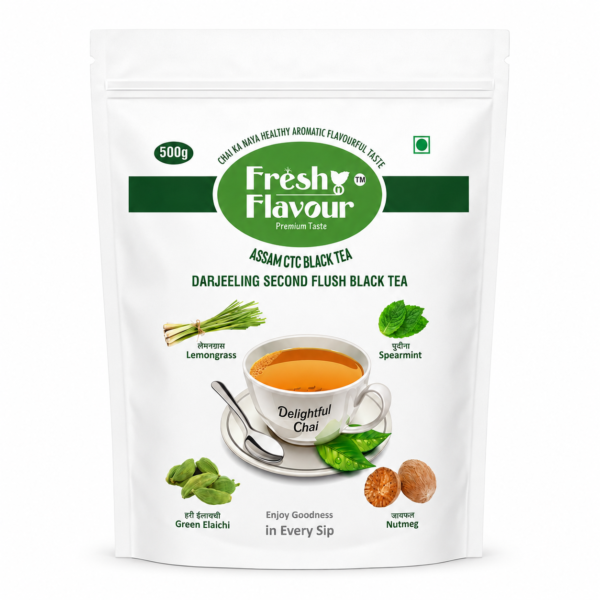
Fresh n Flavour’s Delightful Chai, for instance, blends Assam CTC, Darjeeling Second Flush, Lemongrass, mint, green cardamom and nutmeg — all whole ingredients, not flavour extracts.
CTC Dust vs Mamri Dana vs Leaf Chai
CTC dust brews fastest and strongest, Mamri Dana offers a rounder granule with a smoother release, and leaf-style orthodox tea brews slower with a lighter, more delicate cup. Each suits a different brewing style and taste preference.
| Type | Brew Time | Cup Strength | Best For |
|---|---|---|---|
| CTC Dust | 2-3 minutes | Strong, quick colour | Everyday kadak chai |
| Mamri Dana | 3-4 minutes | Smooth, rounded body | Balanced daily cup |
| Medium CTC | 4-5 minutes | Bold, full body | Strong milk chai lovers |
| Orthodox Leaf | 5-6 minutes | Light, aromatic | Evening or black tea |
Where Fresh n Flavour’s Mamri Dana Fits
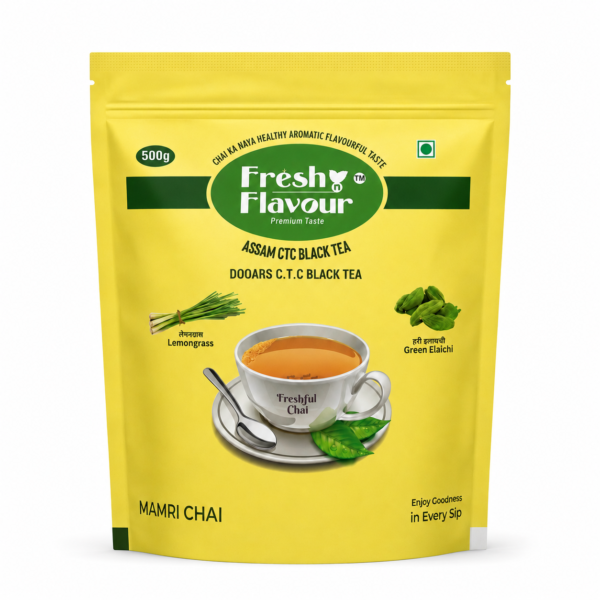
Fresh n Flavour’s Freshful Chai uses a Mamri Dana cut — rounder granules than standard dust — which release flavour more evenly across a longer brew without turning bitter. This makes it forgiving for anyone who tends to oversteep.
Matching Dust Grade to Your Brewing Habit
If you brew chai in under three minutes on a busy morning, go for standard dust grade. If you simmer your chai slowly with milk and spices, a medium dust or Mamri Dana cut suits that style better.
Why Freshness Matters More Than the Pack Date
Freshness in tea dust depends on how the leaf was stored after processing, not just the printed date. Exposure to air, light and moisture breaks down the aromatic oils that give chai its depth, leaving a flat, dusty taste even before the expiry date.
Signs of Stale Tea Dust
Stale dust smells faint or papery instead of malty and rich. The brewed cup looks pale even after boiling for several minutes, and the taste feels flat rather than brisk.
- Smell the dry leaf before brewing — it should smell deep and malty, not dusty
- Check if the colour develops within the first two minutes of boiling
- Notice if the aftertaste feels flat or genuinely brisk and rounded
How Storage Affects the Best Tea Dust in India
Even the best tea dust in India loses character if stored in clear jars near sunlight or left open to humid air. Always reseal the pouch tightly and keep it away from direct heat sources like the stovetop.
According to the Wikipedia entry on tea processing, oxidation and moisture exposure are the primary reasons processed tea loses its aromatic compounds over time, regardless of grade.
Why Lemongrass, Cardamom and Mint Make a Smoother Cup
In Fresh n Flavour’s Delightful and Flavourful blends, lemongrass, cardamom and mint buffer the acidity of the tea, giving a smoother, rounder cup even if you accidentally oversteep by a minute. This is a deliberate recipe choice, not an accident.
This is one reason loyal customers reach for Delightful Chai daily — it stays forgiving even when brewing conditions aren’t perfect.
Which One Should You Pick?
The right chai patti depends on your taste and routine, not just the label claiming to be the best tea dust in India. Match your situation to a blend below rather than guessing from packaging alone.

Our pick
Delightful Chai Patti Online — Delightful blends Assam CTC with Darjeeling Second Flush, lemongrass & botanicals. The best…
250 g ₹450 · 500 g ₹750 ₹899
- If you want a smooth, balanced everyday cup: go with Delightful Chai — Assam and Darjeeling CTC with lemongrass, cardamom, mint and nutmeg.
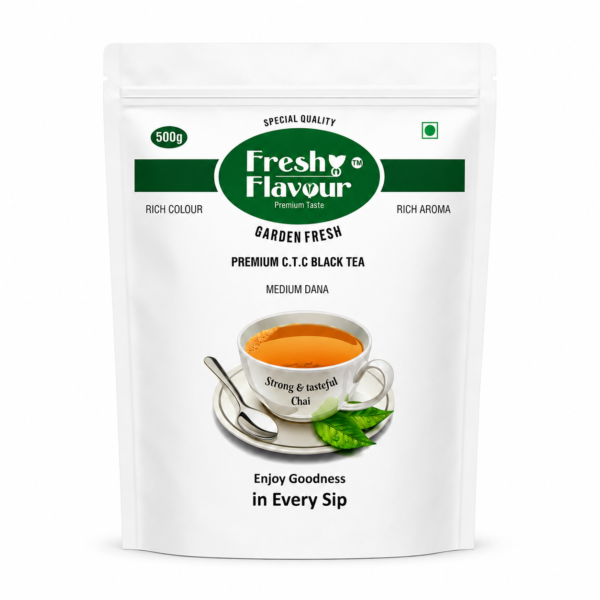
- If you want an extra-strong morning kick: Strong & Tasteful Chai Medium Dana delivers a bolder, fuller body.
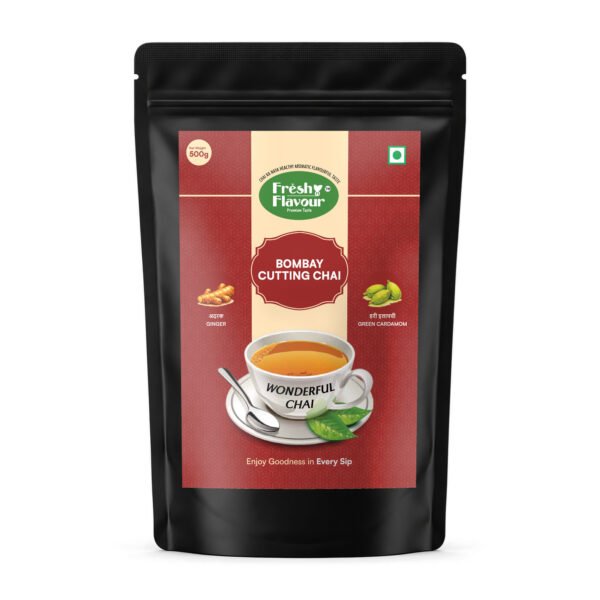
- If you like classic roadside-style chai with ginger warmth: Bombay Cutting Chai brings ginger and cardamom into a brisk Assam-Darjeeling base.
- If you like a smoother, rounder cup: Delightful or Freshful Chai, where lemongrass, cardamom and mint buffer the acidity of the tea.
During this festive season of Navratri and Dussehra, many households switch to premium blends for guests. A pack of Delightful Chai works well both for daily use and festive hospitality, since it suits a wide range of palates without feeling one-note.
For someone exploring beyond a single pack, the Daily Trio: Delightful + Flavourful + Assam Royal Chai Combo lets you compare three distinct profiles from the Fresh n Flavour range in one order.
If you prefer a stronger, more traditional cutting-chai style profile with ginger notes, the Kadak + Masala Pair: Strong & Tasteful + Bombay Cutting Chai Combo is worth trying instead.
Whichever you choose, the goal remains the same: Enjoy Goodness in Every Sip, one properly brewed cup at a time, without settling for stale dust just because a pack is cheap or widely available.
Shop the blends in this guide
Frequently asked questions
What makes the best tea dust in India different from regular tea bags?
The best tea dust in India uses properly sieved CTC granules with consistent size and real whole-spice blending, while many tea bags rely on lower-grade fannings or dust with added flavouring instead of whole ingredients.
Is CTC dust stronger than leaf tea?
Yes, CTC dust brews faster and gives a stronger, darker cup in under three minutes because its smaller particle size exposes more surface area to hot water compared to whole-leaf orthodox tea.
How do I store tea dust to keep it fresh?
Keep tea dust in a sealed, airtight pouch or tin away from sunlight, heat and moisture. Avoid clear glass jars near windows, and reseal the pack tightly after every use to protect the aroma.
Does the best tea dust in India always need added flavouring?
No. Genuinely good tea dust relies on real whole spices like cardamom, ginger or lemongrass rather than synthetic flavouring sprayed onto the leaf, which tends to fade quickly and taste artificial after brewing.
Can I use tea dust for both milk chai and black tea?
Yes, though dust grade is generally better suited to milk-based chai because of its strong, quick colour. For a lighter black tea cup, a medium CTC or orthodox leaf grade usually tastes more balanced.