

At a glance
Chai patti value is the real cost of one cup of tea, calculated from the grams of leaf used per brew divided into the total pack price — not the sticker price on the pouch. A pack that looks expensive can still deliver better chai patti value if it needs less leaf per cup.
- Calculate cost per cup: To calculate cost per cup, divide the pack price by the total grams, multiply by the grams used per cup, typically 3 to 4 grams for a strong kadak chai.
- Pack size change chai patti value: Yes, larger packs almost always improve chai patti value because packaging, printing and handling costs are spread across more grams.
- CTC vs orthodox: CTC tea generally offers better chai patti value for daily masala chai because its crush-tear-curl process extracts colour and strength faster,…
- Picking your blend: The right blend depends on how you drink chai, not just the pack price.
Working out chai patti value means dividing a pack’s total price by the number of cups it actually brews, not just comparing shelf prices. A 500g pack that brews 90 strong cups can cost less per cup than a cheaper 250g pack that runs out in two weeks.
As Diwali approaches and kitchens across Ahmedabad and beyond start stocking up for guests, this number matters more than usual. A festive season means more cups poured, more relatives dropping by, and more chai patti disappearing from the tin faster than expected.
Fresh n Flavour makes this easier to judge because every blend lists its exact composition on the pack — Assam CTC, Darjeeling Second Flush, and named spices — so you know precisely what you are brewing, cup after cup.
This guide breaks down how to actually calculate chai patti value, why pack size changes the math, and which blend from the Fresh n Flavour range suits a daily kadak cup versus an occasional festive one.
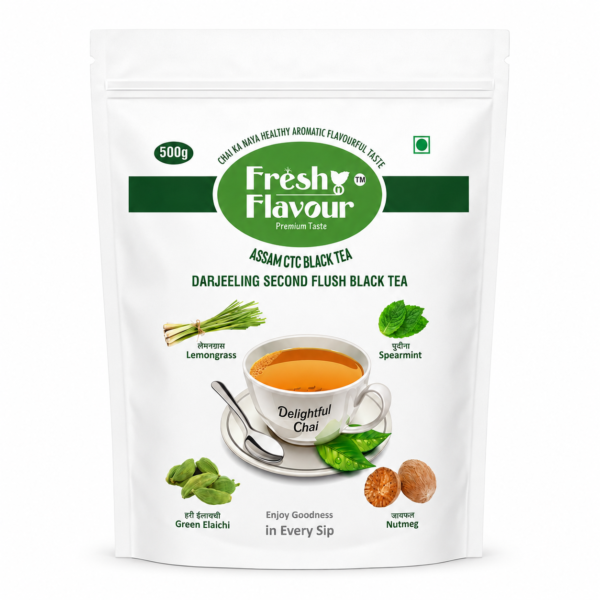
Mentioned in this guide
Delightful Chai Patti Online — Delightful blends Assam CTC with Darjeeling Second Flush, lemongrass & botanicals. The best…
250 g ₹450 · 500 g ₹650 ₹899
What Does Chai Patti Value Actually Mean?
Why Shelf Price Misleads Buyers
Two 500g packs priced similarly can brew very differently. A loosely packed, weak CTC may need double the quantity per cup compared to a dense, well-graded Assam CTC Tea blend to get the same colour and strength.
This is why chai patti value cannot be judged by price tag alone. The leaf’s cut, grade, and blend ratio decide how far a pack actually stretches in your kitchen.
What Changes the Number
- Leaf grade: finer CTC grains brew faster and stronger, needing less quantity per cup
- Spice blend: whole spices like Cardamom add aroma without needing extra tea leaf
- Brewing habit: a single strong boil uses less patti than brewing weak tea twice
- Household size: a family of five sees better per-cup value from a 500g pack than a 250g one
How Do You Calculate Cost Per Cup?
To calculate cost per cup, divide the pack price by the total grams, multiply by the grams used per cup, typically 3 to 4 grams for a strong kadak chai. This gives the real chai patti value instead of a guess based on pack size alone.
A Simple Worked Example
Say a 500g pack is used at 4 grams per cup. That pack yields roughly 125 cups. Divide the pack price by 125, and you get the exact rupee cost of a single cup, milk and sugar aside.
Do this math across two or three blends you are considering, and the real chai patti value becomes obvious fast — sometimes a slightly pricier pack wins comfortably.
Why Strength Per Gram Matters More Than Price
A blend that gives a fuller, rounder cup at 3 grams instead of 5 grams effectively costs less, even if the pack price is identical. This is where the quality of the leaf and the spice ratio inside it make the real difference.
Delightful Chai blends Assam CTC with Darjeeling Second Flush, Lemongrass, mint, green cardamom and nutmeg. The cardamom and nutmeg carry aroma without needing a heavier tea quantity to feel full-bodied.
Does Pack Size Change Chai Patti Value?
Yes, larger packs almost always improve chai patti value because packaging, printing and handling costs are spread across more grams. A 500g pouch typically costs less per cup than an identical blend sold in a 250g pouch.
When a Smaller Pack Still Makes Sense
Specialty blends like Shahi Kesar CTC Chai with saffron, pistachio and almond are often sold in 250g packs because they are brewed occasionally, not daily. Buying a big pack of an occasional blend can mean stale spice aroma by the time you finish it.
For daily cups, a bigger pack wins on chai patti value. For festive or gifting blends brewed once a week, a 250g pack keeps the spice aroma fresher for longer.
Bundles and Festive Stocking
With Navratri fasting routines ending and Dussehra gatherings bringing guests home, many households stock up on larger packs this month. A combo pack covering both a daily blend and a festive one often works out better value than buying each separately later.
The Daily Trio: Delightful + Flavourful + Assam Royal Chai Combo gives three full-size 250g pouches, useful for comparing chai patti value across blends without committing to one large pack.
CTC vs Orthodox: Which Gives Better Value?
CTC tea generally offers better chai patti value for daily masala chai because its crush-tear-curl process extracts colour and strength faster, needing less leaf per cup than orthodox whole-leaf tea.
How CTC Brews Differently
The CTC method breaks tea leaves into small, dense granules with more surface area exposed to hot water. This means a strong cup brews in minutes with less quantity, which is exactly why most Indian masala chai recipes default to CTC.
Early tea planters in Assam documented this extraction difference as the industry scaled production (as noted in Harold H. Mann’s 1918 study of the Assam tea industry), and the same principle holds in kitchens today.
Comparing the Two Styles
| Factor | CTC Tea | Orthodox Tea |
|---|---|---|
| Leaf needed per cup | Lower, 3-4g | Higher, 5-6g |
| Brewing time | Fast, 3-4 minutes | Slower, longer steep |
| Best suited for | Daily kadak milk chai | Lighter, black tea sipping |
| Typical chai patti value | Better per cup | Lower per cup |
| Example blend | Strong & Tasteful Chai | Assam Royal Chai |
The Tea Board of India documents CTC as the dominant processing style for Indian masala chai consumption, largely due to this stronger, faster extraction (Tea Board of India).
Which Blend Should You Pick?
The right blend depends on how you drink chai, not just the pack price. Matching your daily habit to the right blend is what actually improves chai patti value over a month, not a single purchase decision.

Our pick
Delightful Chai Patti Online — Delightful blends Assam CTC with Darjeeling Second Flush, lemongrass & botanicals. The best…
250 g ₹450 · 500 g ₹650 ₹899
Matching the Blend to Your Cup
- If you want a daily, smoother cup without strong tannic bite, choose Delightful Chai in the 500g pack for better everyday chai patti value
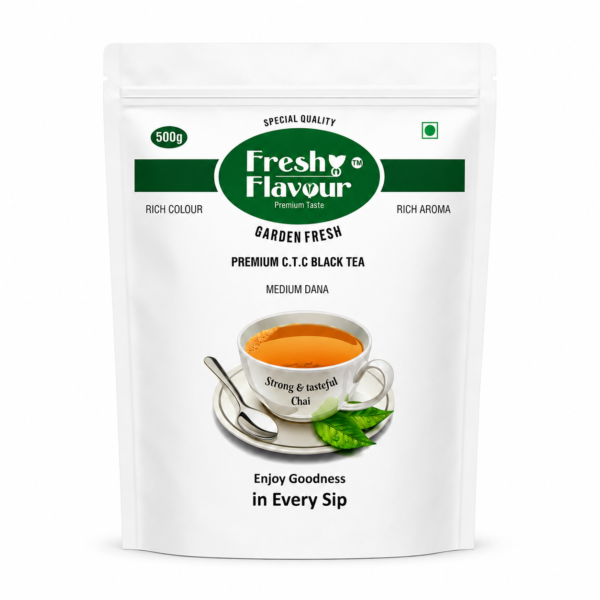
- If your household wants a strong, kadak hit every morning, go for Strong & Tasteful Chai Medium Dana
- If you brew for guests occasionally during festivals, a 250g specialty pack like Shahi Kesar CTC Chai makes more sense than a large pack
- If you want variety across the week without buying four separate pouches, a combo pack spreads cost better
When a Bigger Pack Is Not the Right Call
If you only drink chai occasionally, or like switching blends often, a large 500g pack is not good chai patti value — the spice aroma fades before you finish it. In that case, smaller 250g packs or trio combos make more practical sense.
Fresh n Flavour offers 14 distinct chai recipes specifically so households are not stuck repeating the same single flavour from a giant tin for months. Enjoy Goodness in Every Sip applies whether you are brewing a daily cup or a festive one.
Shop the blends in this guide
Frequently asked questions
What is chai patti value?
Chai patti value is the real cost of a single cup of tea, calculated by dividing the total pack price by the number of cups it brews, rather than comparing pack prices directly on the shelf.
How do I work out chai patti value at home?
Weigh how much chai patti you use per cup, usually 3-4 grams, divide the pack weight by that amount to get total cups, then divide the pack price by that cup count for your real per-cup cost.
Does a bigger pack always mean better chai patti value?
Usually yes for daily blends, since packaging costs spread across more grams. But for occasional or specialty blends you brew rarely, a smaller pack keeps spice aroma fresher and avoids waste.
Is CTC tea better value than orthodox tea for daily chai?
Yes, CTC tea generally needs less leaf per cup because of its processing method, which extracts colour and strength faster than whole-leaf orthodox tea, improving everyday chai patti value.
Which Fresh n Flavour blend offers the best everyday value?
Delightful Chai in the 500g pack is suited to daily brewing, offering a smoother, rounder cup from its cardamom, mint and lemongrass blend without needing extra tea leaf per cup.