

Table of Contents
The lemongrass vs ginger tea debate comes up in almost every Indian household once the rains start easing and the air turns humid instead of cool. Both are aromatic, both are traditional, and both find their way into chai across the country, yet they behave very differently in a cup. This guide breaks down the real differences so you can choose the right one for September’s transitional weather.
Looking for the chai itself? See our lemongrass chai patti: three blends, with free shipping across India.
At Fresh n Flavour, we blend both botanicals into different recipes for exactly this reason — lemongrass and ginger play different roles. One is citrusy and cooling in character, the other is warm and sharp. Understanding this distinction changes how you brew, and even how your chai tastes with milk.
Lemongrass vs Ginger Tea: The Core Difference
Lemongrass tea is citrusy, light and fragrant, while ginger tea is pungent, warming and bold. The lemongrass vs ginger tea choice essentially comes down to whether you want a light, mellow cup or a sharp, spicy one that wakes up the senses immediately.
Lemongrass: The Cooling Citrus Note
Lemongrass brings a lemony, grassy aroma without any actual citrus fruit. It’s been used across South and Southeast Asia for generations, valued in kitchens for its fresh, citrus-like fragrance in teas, soups and curries.
It pairs beautifully with milk tea because it doesn’t fight the tannins from Assam CTC Tea. Instead, it rounds out the sharpness, which is exactly why Fresh n Flavour uses it as a base note in several blends.
Ginger: The Warming Spice Kick
Ginger is pungent, peppery and instantly warming. A staple of Indian kitchens, it’s the spice most Indian households reach for the moment the weather turns damp and cool.
Unlike lemongrass, ginger has a strong, assertive flavor that dominates a cup. A little goes a long way, especially in the humid late-monsoon days we’re seeing this September.
Try it yourself
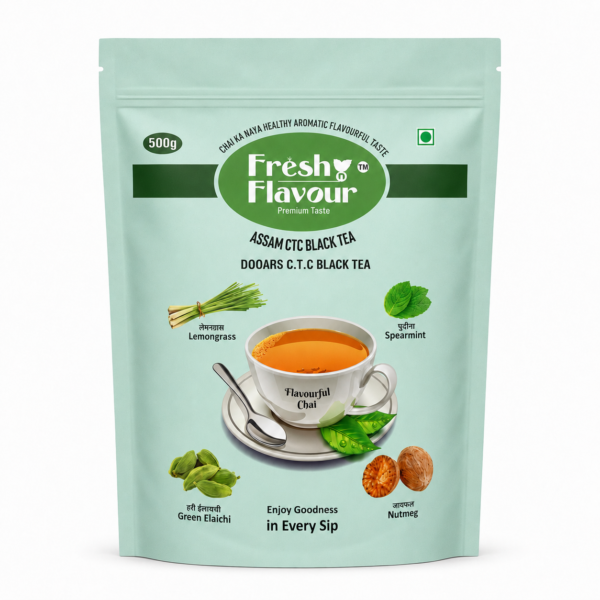
Flavourful Chai
★★★★★ (3)Flavourful chai patti online — bold Dooars CTC base blended with lemongrass, spearmint and exotic spices. Premium chai…
(incl. GST)
Shop now →What Does Each Taste Like?
Lemongrass tastes bright, citrusy and slightly sweet, while ginger tastes hot, sharp and slightly bitter at higher doses. This single taste distinction is often the deciding factor in the lemongrass vs ginger tea choice for most first-time chai drinkers.
Lemongrass on the Palate
Think of biting into a lemon rind without the sourness — that’s roughly the sensation lemongrass gives. It’s refreshing rather than heavy, which makes it popular in iced chai and evening cups alike.
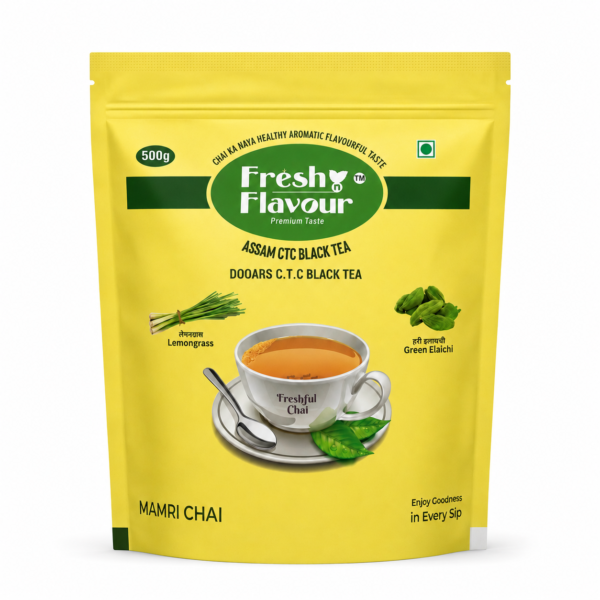
In Fresh n Flavour’s Flavourful Chai, lemongrass is blended with spearmint and green cardamom over a bold Dooars CTC base, giving a citrusy, refreshing character without ever tasting sour.
Ginger on the Palate
Ginger delivers heat that builds on your tongue and throat. It’s the reason “adrak wali chai” is the default order at roadside stalls during the rains — that spicy kick feels immediately comforting against damp weather.
Too much ginger, though, can turn a cup bitter or overpoweringly hot, which is why measured, hand-blended ratios matter far more than people realize.
Which One Suits Late Monsoon Weather?
Lemongrass suits the tapering monsoon better than ginger because it’s lighter and cooling, whereas ginger is better saved for the sharper cold of early winter. September’s 26-34°C humid days call for a refreshing cup, not an intensely spicy one.
September’s Transition Weather
As Ganesh Chaturthi celebrations wind down and Navratri preparation begins, the weather sits in an odd in-between zone — still humid, occasionally rainy, but no longer the heavy downpours of peak monsoon.
This is precisely when a lemongrass-forward chai like Fresh n Flavour’s Delightful Chai feels right — light enough for humid afternoons, aromatic enough to feel festive.
When Ginger Still Wins
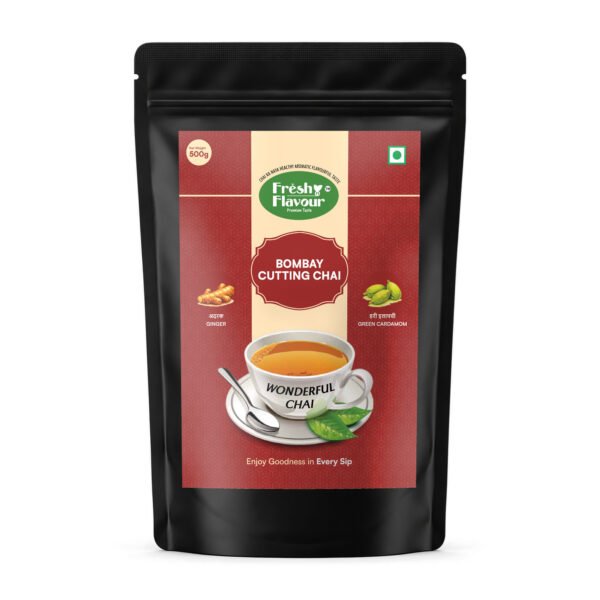
If the rain suddenly returns with a chill, ginger’s warming intensity is genuinely more comforting. Save your ginger-forward cups, like Fresh n Flavour’s Flavourful Chai or the dedicated Bombay Cutting Chai, for those specific damp, gray mornings.
Lemongrass vs Ginger Tea: A Side-by-Side Table
The table below breaks the lemongrass vs ginger tea comparison into practical, purchase-relevant categories so you can decide in seconds rather than guessing.
| Factor | Lemongrass Tea | Ginger Tea |
|---|---|---|
| Flavor Profile | Citrusy, light, floral | Pungent, warming, spicy |
| Best Season | Late monsoon, summer | Winter, heavy rain days |
| Time of Day | Morning or evening | Early morning cup |
| Pairs Best With | Mint, cardamom, nutmeg | Black pepper, cardamom, tulsi |
| Traditional Use | Bright citrus aroma | Warmth, peppery bite |
| Fresh n Flavour Pick | Delightful Chai | Flavourful Chai / Bombay Cutting |
Try it yourself
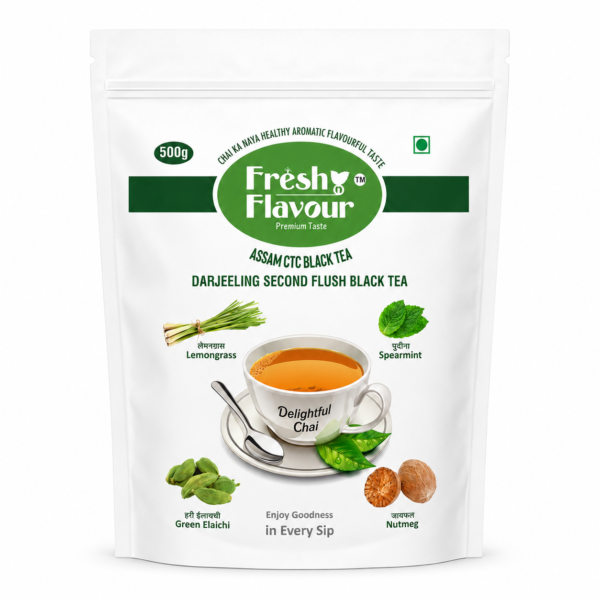
Delightful Chai
Delightful Chai Patti Online — Delightful blends Assam CTC with Darjeeling Second Flush, lemongrass & botanicals. The best…
(incl. GST)
Shop now →Can You Combine Lemongrass and Ginger?
Yes — lemongrass and ginger can be blended in the same cup, and many Indian households already do this instinctively during seasonal transitions. The citrus brightness of lemongrass balances the sharp heat of ginger rather than clashing with it.

Why the Combination Works
Lemongrass adds lift and freshness on top of ginger’s warmth, creating a rounder cup than either ingredient alone. This is a technique documented informally in 19th-century Indian kitchens, where spice blending for chai was a hands-on craft rather than a fixed formula (as recorded in “The Indian Cookery Book,” 1880).
Fresh n Flavour’s Flavourful Chai takes this exact approach — a bold Dooars CTC base blended with lemongrass, spearmint and warming spices, giving you both cooling and warming notes in a single cup.
A Brewing Ratio Worth Knowing
We recommend one heaped teaspoon of Flavourful Chai per cup, simmered in water for two minutes before adding milk. This ratio lets the lemongrass aromatics release fully before the ginger’s heat takes over, avoiding a flat or overly bitter cup.
Which One Should You Pick?
Choosing between lemongrass and ginger chai depends entirely on your weather, your mood, and the flavour you’re craving on any given day — there’s no universally “better” option.
- If you want a light, refreshing cup for humid September afternoons, choose lemongrass-forward Delightful Chai.
- If you want a bold, spiced cup that also carries lemongrass’s citrus lift, choose Flavourful Chai.
- If a sudden rain chill hits and you want something warm and spicy, a ginger-heavy cup like Bombay Cutting Chai is the better call.
- If you’re prepping for Navratri fasting days and want something milder, lemongrass-based blends are traditionally the lighter choice.
Flavourful Chai is not the right pick if you specifically want an ultra-mild, purely citrus cup with zero spice heat — for that, Delightful Chai is the better match. Every recipe here is hand-blended in small batches in Ahmedabad, so freshness is consistent regardless of which you choose.
Tea’s journey from Assam’s wild gardens to Indian kitchens is well documented — early planters noted the region’s natural suitability for tea cultivation long before commercial gardens existed (as documented in Harold Mann’s 1918 study of Assam tea). For deeper reading on tea chemistry and origin, see Wikipedia’s overview of tea.
Whichever side of the lemongrass vs ginger tea debate you land on, Fresh n Flavour’s range means you don’t have to pick just one recipe forever. With 14 handcrafted varieties, there’s a cup suited to every mood, season and festival — because we believe you should Enjoy Goodness in Every Sip.
Shop the blends in this guide
Frequently Asked Questions
Try it yourself
Delightful Chai
Delightful Chai Patti Online — Delightful blends Assam CTC with Darjeeling Second Flush, lemongrass & botanicals. The best…
(incl. GST)
Shop now →