

Table of Contents
If you have ever stood in a supermarket aisle wondering which pack to grab, you already know the search for the best tea powder for milk tea in India is more confusing than it should be. Dozens of brands, similar-looking packets, and vague words like “premium” or “strong” on every label. This guide cuts through that noise with real comparisons, not marketing fluff.
As the monsoon tapers off this September and Ganesh Chaturthi preparations begin, kitchens across India are stocking up for festive guests and the first cool evenings of the season. It’s the perfect moment to rethink your everyday chai patti.
What Is the Best Tea Powder for Milk Tea in India?
The best tea powder for milk tea in India is a CTC (Crush, Tear, Curl) blend made from Assam or a mix of Assam and Darjeeling leaves, because CTC granules release colour and strength quickly in boiling milk. Loose-leaf orthodox teas are gentler and better suited to black tea, not heavily milked chai.
Why Leaf Origin Matters
Assam leaves, grown in the humid Brahmaputra valley, give chai its deep malty body and reddish colour. Assam CTC Tea is the backbone of almost every popular Indian masala chai recipe, from roadside tapri stalls to home kitchens.
Darjeeling leaves, by contrast, bring a lighter, floral muscatel note. When blended with Assam CTC in the right ratio, you get strength without harshness — this is exactly the principle behind Fresh n Flavour’s Delightful Chai.
What Makes a Chai Patti Genuinely Good
A good chai patti should brew a consistent colour every time, hold its aroma after boiling, and not turn bitter or sour when milk is added. Whole spice inclusion, rather than powdered essence, is what separates a hand-blended chai from a mass-produced one.
- Consistent granule size for even extraction
- Whole spices like cardamom and nutmeg, not flavouring agents
- No burnt or over-fermented leaf smell
- A blend built specifically for milk, not black tea
Try it yourself
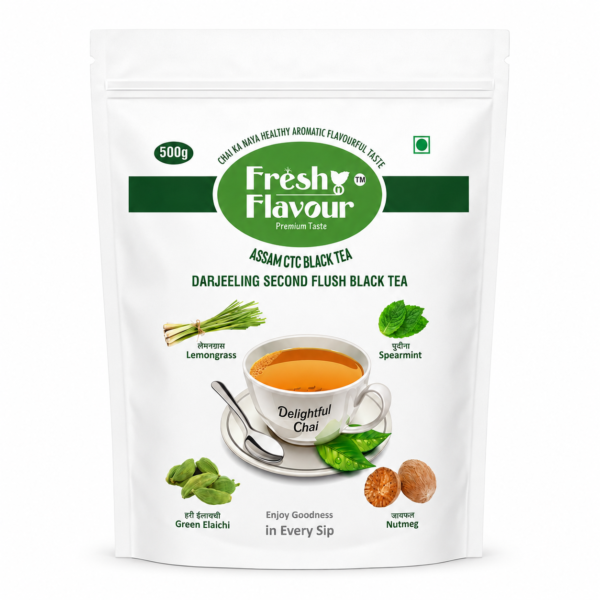
Delightful Chai
Delightful Chai Patti Online — Delightful blends Assam CTC with Darjeeling Second Flush, lemongrass & botanicals. The best…
(incl. GST)
Shop now →Why Does CTC Tea Work Better Than Loose Leaf for Milk Tea?
CTC tea works better for milk tea because its small, tightly rolled granules have more surface area, releasing colour and tannins faster during the short boiling time most Indian households use. Orthodox leaf tea needs longer steeping, which doesn’t suit the quick stovetop method.
This is well documented in tea industry history. Harold H. Mann’s 1918 study of Assam tea cultivation noted how processing methods were adapted specifically to match how Indian households actually brewed their tea (as documented in Harold Mann’s 1918 study of Assam tea). CTC processing itself emerged later to speed up exactly this kind of strong, milky brew.
The Sharpness Problem With Plain CTC
Plain CTC tea, brewed strong and boiled long, often turns sharp and bitter and leaves a sour aftertaste. This is the single biggest complaint chai drinkers have about their everyday tea powder.
Fresh n Flavour solves this with a specific botanical formula: Lemongrass, Cardamom, spearmint and nutmeg. Lemongrass, cardamom and mint buffer the acidity of the tea — this is why Delightful Chai and Flavorful Chai are formulated the way they are, not as a random spice mix but a deliberate acidity-free recipe.
How the Right Cut Changes Your Cup
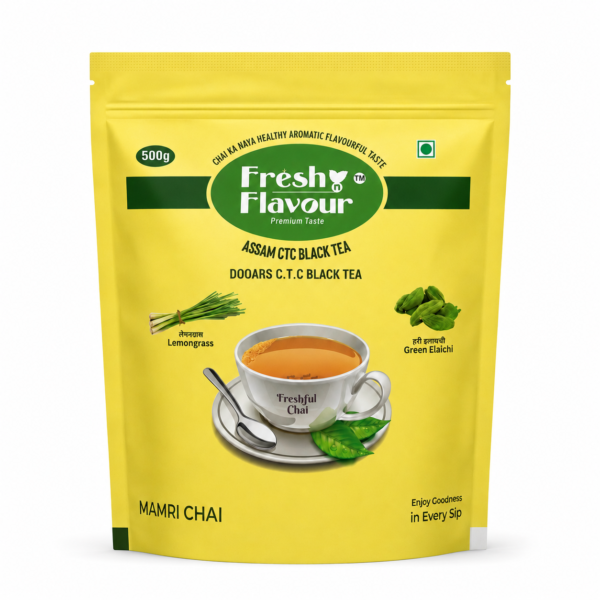
Different CTC “cuts” or granule sizes brew differently. Fresh n Flavour’s Freshful Chai uses a Mumri Dana cut, which is slightly coarser than standard CTC, giving a smoother release compared to the sharper, faster extraction of fine-dust CTC used in very strong kadak blends.
How Do You Choose the Right Chai Blend for Your Cup?
Choosing the right chai blend depends on three things: how strong you like your tea, whether you prefer a mild, smooth cup or a sharper one, and whether you want plain black tea flavour or a spiced version. Matching these to a specific blend saves you from repeated trial-and-error purchases.
Strength Preference
If you like a strong, kadak cup that cuts through milk and sugar, look for a blend built purely from robust Assam CTC. If you prefer a gentler, more rounded cup, a Darjeeling-Assam fusion softens the edge.
Spice Preference
Some drinkers want their Ginger and cardamom already blended into the leaf; others prefer plain tea and add spices fresh at home. Pre-blended chai pattis save time and give consistent flavour cup after cup, which matters when you’re making chai for guests during Ganesh Chaturthi or Navratri gatherings.
Everyday vs Occasional Use
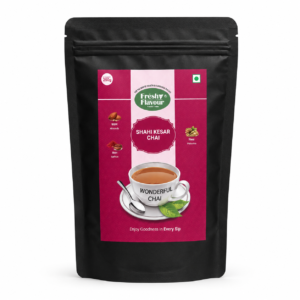
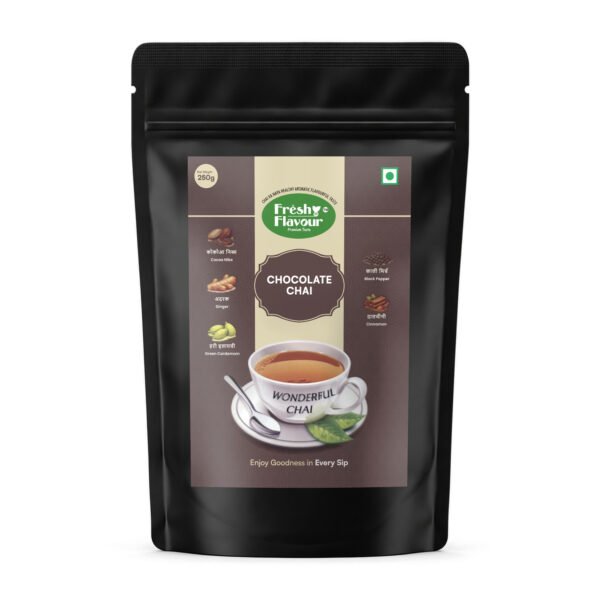
A 500g pack like Delightful Chai suits daily household use, while smaller 250g specialty blends like Shahi Kesar or Chocolate CTC Chai work well for festive mornings or when guests are visiting.
Comparing Fresh n Flavour Blends: Which Suits You?
Here is a direct comparison of five popular Fresh n Flavour blends, so you can match your taste and daily routine to the right chai patti without guesswork.
| Blend | Base | Strength | Best For |
|---|---|---|---|
| Delightful Chai | Assam + Darjeeling | Medium | Daily milk tea, acidity-free |
| Strong and Tasteful Chai | Assam + Darjeeling CTC | Very Strong | Kadak chai lovers |
| Freshful Chai | Assam + Dooars | Medium | Smooth Mumri Dana cut |
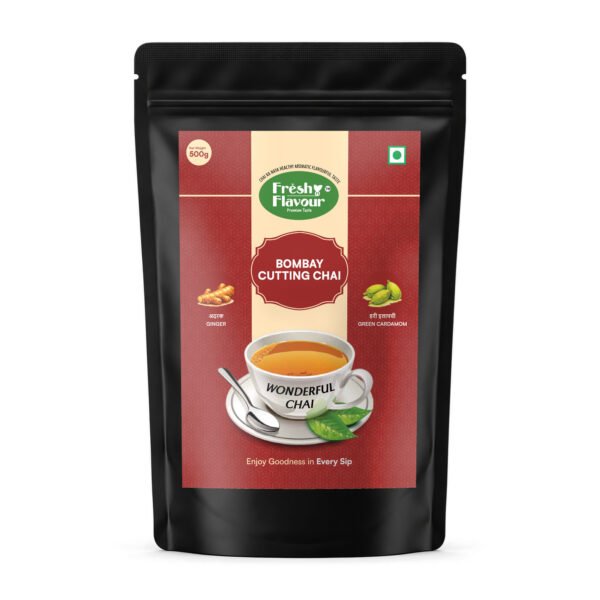
| Bombay Cutting Chai | Assam + Darjeeling | Strong | Tapri-style ginger chai |
| Assam Royal Chai | Assam CTC + Orthodox | Strong, Malty | Purists who avoid spices |
Reading Botanical Ingredients on the Pack
According to Sir J.D. Hooker’s botanical records in “The Flora of British India” (1872-1897), Camellia sinensis and companion spices like cardamom have long been recognised for their distinct aromatic oils. This is why whole-spice blending, not flavour essence, produces a truer cup.
When you read a chai patti label, look for named whole spices rather than vague terms like “natural flavouring.” Fresh n Flavour lists exact botanicals — Assam CTC, Darjeeling Second Flush, Lemongrass, Mint, Green Cardamom and Nutmeg in Delightful Chai — so you know precisely what’s brewing in your cup.
Small-Batch Blending Matters
Fresh n Flavour blends are hand-crafted in small batches in Ahmedabad, which allows tighter control over spice ratios compared to large factory runs where consistency often varies pack to pack.
Try it yourself
Freshful Chai
★★★★★ (17)Lemongrass chai patti — Premium chai patti online — Freshful blends Assam CTC with Dooars black tea, lemongrass…
(incl. GST)
Shop now →Which One Should You Pick?
If you want a smooth everyday cup, choose Delightful Chai — an acidity-free blend in which lemongrass, cardamom and mint buffer the acidity of the tea, with nutmeg for warmth.

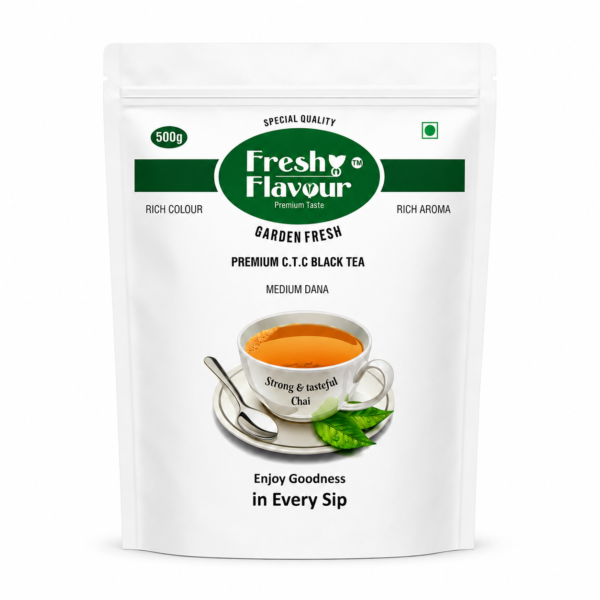
If you want a strong, no-nonsense kadak chai for early mornings, go with Strong and Tasteful Chai, made purely from garden-fresh Assam and Darjeeling CTC.
- Want festive flavour for Ganesh Chaturthi guests? Try Shahi Kesar CTC Chai for a saffron-rich, celebratory cup.
- Prefer tapri-style ginger chai? Bombay Cutting Chai replicates the Mumbai street-side classic.
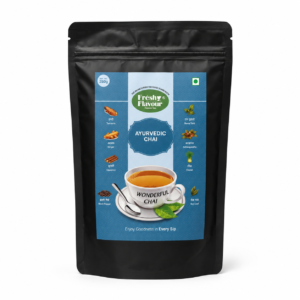
- Want a herbal everyday cup? Ayurvedic CTC Chai blends nine traditional herbs with your regular brew.
Delightful Chai is not the right pick if you specifically want an intensely bitter, ultra-strong kadak cup with no spice softening — for that, Strong and Tasteful Chai is the better match.
How Should You Brew the Best Tea Powder for Milk Tea?
Brew the best tea powder for milk tea in India by boiling water first, adding one to one-and-a-half teaspoons of chai patti per cup, simmering for two minutes, then adding milk and boiling again briefly. This two-stage method extracts colour before milk dulls it.
The Ratio Fresh n Flavour Recommends
For a balanced cup, use roughly 200ml water to 100ml milk per person with one heaped teaspoon of chai patti. Simmering the leaf in water alone for 90 seconds before adding milk brings out fuller colour and strength without over-boiling the milk.
Common Brewing Mistakes
Boiling milk and tea leaves together from the start is the most common mistake — it mutes the tea’s natural aroma and increases the chance of a bitter, over-extracted taste. Adding leaves to already-boiling water first solves this.
For deeper reading on tea processing methods and their effect on flavour, the Tea Board of India publishes detailed information on CTC versus orthodox manufacturing that’s worth a look if you enjoy the technical side of your daily cup.
Storing Your Chai Patti Correctly
Store chai patti in an airtight container away from direct sunlight and moisture. Gujarat’s late-monsoon humidity this September makes airtight storage especially important, since damp air can dull both aroma and colour within weeks.
Fresh n Flavour packs its blends to lock in freshness, but transferring to a dry steel or glass container at home extends shelf life further, especially once opened.
Ultimately, the best tea powder for milk tea in India isn’t the strongest or the cheapest — it’s the one that matches your taste, your household, and your daily routine. Fresh n Flavour was built on that idea: fourteen distinct recipes instead of one generic blend, because Enjoy Goodness in Every Sip means something different for every household.
Shop the blends in this guide
Frequently Asked Questions
Try it yourself
Chocolate CTC Chai
Chocolate chai patti online — where Assam CTC meets cocoa nibs & chocolate extract. A premium chai patti…
(incl. GST)
Shop now →