

Table of Contents
The cutting chai meaning traces back to Mumbai’s roadside tapri culture, where a full cup of tea is “cut” into two half-glasses shared between friends. It is strong, sweet, aromatic and always served piping hot in small glasses. Understanding this meaning matters before you buy a blend that claims to be cutting chai.
Not every pack labelled “cutting chai” actually delivers that bold tapri punch. Some are just regular masala chai renamed for trend value. This guide breaks down exactly what cutting chai means, what to check before buying, and why Fresh n Flavour‘s approach stays true to the original street-style recipe.
As the late monsoon rains taper off across Gujarat and much of India this September, humid evenings and the run-up to Ganesh Chaturthi make it prime season for a strong, spicy cutting chai session with friends and family.
What Is Cutting Chai Meaning, Really?
Cutting chai meaning refers to a small, strong, half-serving of milk tea traditionally sold at Mumbai tapri stalls, cut from a full glass and shared between two people. It is bold, slightly sweet, and brewed with ginger and cardamom for extra kick.
The word “cutting” itself comes from the Mumbai habit of splitting one full glass of chai into two smaller pours — a practical, budget-friendly gesture between colleagues taking a quick tea break. Over decades, it became a cultural ritual rather than just a portion size.
The Street Origins of the Term
Mumbai’s tapri (roadside stall) culture built an entire social rhythm around cutting chai. Office workers, taxi drivers, and college students gather for a five-minute break, sharing a strong glass instead of ordering a full one each.
This is different from home-style masala chai, which is usually brewed in bigger batches and enjoyed slowly. Cutting chai is quick, punchy, and meant to be enjoyed in a short break between tasks.
Why the Meaning Still Matters Today
Knowing the real cutting chai meaning helps you spot authentic blends versus marketing gimmicks. A true cutting chai patti should be strong enough to hold up against milk and sugar without turning weak or watery.
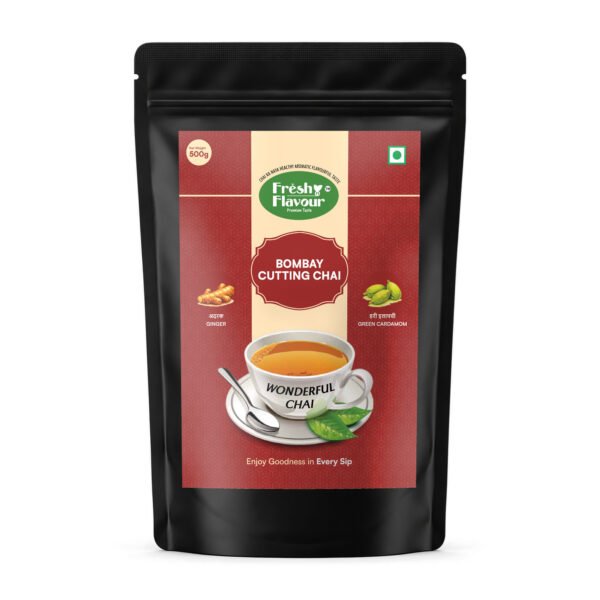
Fresh n Flavour’s Bombay Cutting Chai was designed specifically to recreate that tapri intensity, using Assam and Darjeeling CTC with real ginger and cardamom — no shortcuts, no diluted flavour.
Try it yourself
Bombay Cutting Chai
★★★★★ (5)Bombay Cutting chai patti online — authentic Mumbai tapri-style blend with ginger, cardamom & bold CTC base. Premium…
(incl. GST)
Shop now →Why Does Cutting Chai Taste So Different?
Cutting chai tastes stronger and spicier than regular chai because it uses a higher tea-to-water ratio, bold CTC leaves, and generous ginger for extra warmth. This concentrated brew is designed to be strong enough even after milk and sugar dilute it.
Regular home chai often uses lighter tea quantities meant for a full cup enjoyed slowly. Cutting chai flips that ratio — it’s brewed strong on purpose because it’s served in small glasses and consumed fast.
The Role of CTC Tea
Assam CTC Tea (Crush, Tear, Curl) releases colour and strength faster than orthodox leaves, making it ideal for the quick-brew style tapri stalls need. This is precisely why most authentic cutting chai recipes rely on CTC rather than delicate orthodox leaf.
Harold H. Mann’s 1918 study on Assam tea cultivation documented how robust, high-tannin Assam leaf became the backbone of India’s everyday chai culture — a legacy that still defines cutting chai today (as documented in Harold Mann’s 1918 study of Assam tea).
Spices That Define the Flavour
Ginger and cardamom aren’t optional extras in cutting chai — they are essential. Ginger adds sharp warmth while cardamom rounds out the bitterness of strong CTC tea, creating that instantly recognisable tapri aroma.
7 Things to Check Before You Buy Cutting Chai
Before buying any pack labelled cutting chai, check the tea base, spice ratio, leaf grade, freshness, blend origin, brewing strength, and whether it’s hand-blended in small batches. These seven checks separate authentic tapri-style chai from generic masala tea repackaged with a trendy name.
- Tea base: Look for Assam or Darjeeling CTC, not just “black tea” listed vaguely.
- Spice ratio: Real cutting chai has visible ginger and cardamom pieces, not just flavouring.
- Leaf grade: CTC granules should be uniform, not powdery dust.
- Freshness: Check for a recent packing date — stale CTC loses its punch fast.
- Blend origin: Small-batch, hand-blended teas usually taste more consistent than mass-produced ones.
- Brewing strength: A good cutting chai should stay strong even with milk added.
- No artificial flavour: Genuine tapri taste comes from real spices, never synthetic essence.
Fresh n Flavour hand-blends its Bombay Cutting Chai in small batches in Ahmedabad, using real ginger and cardamom pieces rather than flavouring oils — a detail that matters once you understand true cutting chai meaning.
Reading the Ingredient List Properly
Always scan for whole spice names like ginger, cardamom, or nutmeg rather than vague terms like “natural flavour.” Whole spice blends brew a rounder, more authentic cup compared to flavour-coated tea dust.
Checking for Harsh Taste
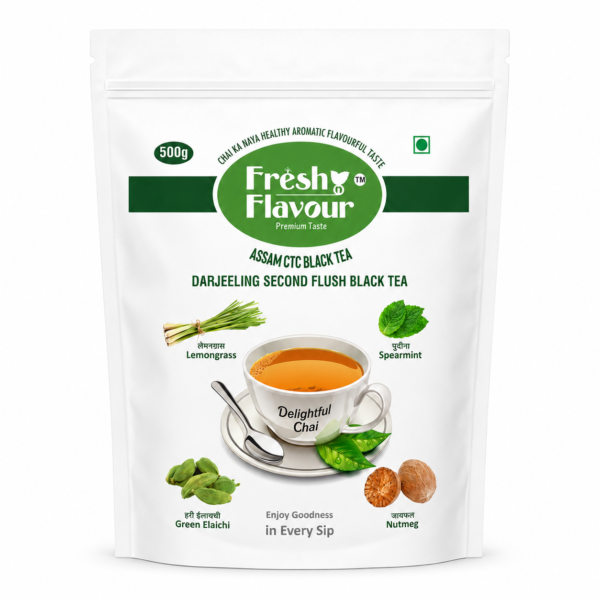
Some strong CTC blends can taste harsh or sharp, especially during humid weather. If you prefer a softer cup, Fresh n Flavour’s Delightful Chai uses lemongrass, cardamom, mint and nutmeg together. Lemongrass, cardamom and mint buffer the acidity of the tea — a formulation detail unique to how Fresh n Flavour blends its teas.
Try it yourself
Delightful Chai
Delightful Chai Patti Online — Delightful blends Assam CTC with Darjeeling Second Flush, lemongrass & botanicals. The best…
(incl. GST)
Shop now →CTC vs Orthodox: Which Suits Cutting Chai?
CTC tea suits cutting chai better than orthodox because it brews faster, releases stronger colour, and holds up against milk and sugar in a quick five-minute steep. Orthodox leaf brews slower and suits lighter, more delicate cups instead.
| Feature | CTC Tea | Orthodox Tea |
|---|---|---|
| Brewing speed | Fast, 3-5 minutes | Slower, 5-7 minutes |
| Strength with milk | Holds strong flavour | Can turn subtle |
| Best for | Cutting chai, kadak chai | Light evening cups |
| Appearance | Small granules | Whole twisted leaves |
| Fresh n Flavour pick | Bombay Cutting Chai | Assam Royal Chai |
According to the Tea Board of India, CTC processing accounts for the majority of India’s domestic tea consumption precisely because of this quick-brew, high-strength character suited to milk tea.
Why Grain Size Matters
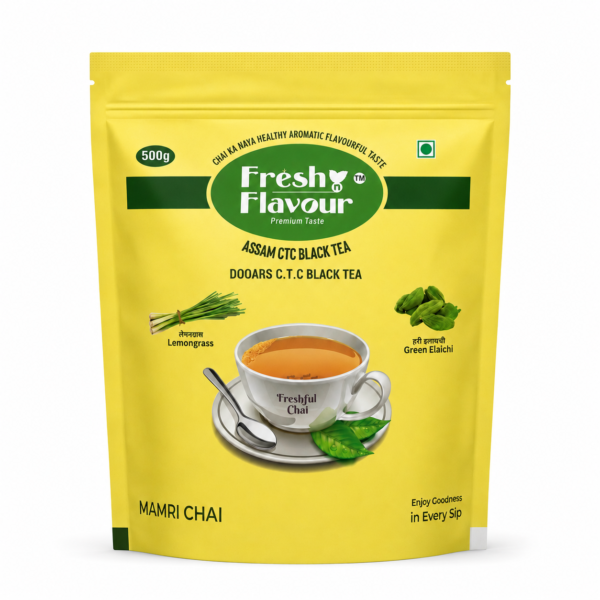
Fresh n Flavour’s Freshful Chai uses a distinct Mumri Dana cut — slightly coarser granules than standard CTC dust — which brews a touch slower and suits those who prefer a gentler roadside-style cup without overpowering bitterness.
Matching Tea to Occasion
Cutting chai works best for quick breaks, monsoon evenings, or festive gatherings like Ganesh Chaturthi visits, when guests arrive in waves and you need a fast, flavourful pour ready in minutes.
Which Cutting Chai Should You Pick?
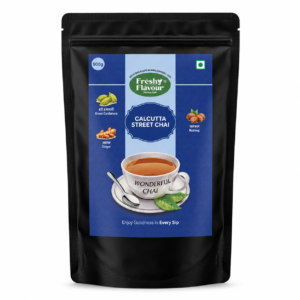
If you want the authentic Mumbai tapri experience with ginger and cardamom punch, choose Bombay Cutting Chai. If you prefer a Kolkata-style variation with extra spice depth, Calcutta Street CTC Chai is the better match.
- Want true tapri-style strength: Bombay Cutting Chai is built exactly for this — bold Assam and Darjeeling CTC with real ginger and cardamom.
- Want a Bengal-style twist: Calcutta Street CTC Chai adds nutmeg and Assam Orthodox for extra complexity.
- Prefer a lighter cup or less spice: skip cutting chai styles and go for Delightful Chai instead, which is milder and acidity-free.
- Want the boldest kadak cup possible: Strong & Tasteful Chai skips added spice entirely for straight Assam CTC intensity.
This is where understanding cutting chai meaning genuinely helps you shop smarter — not every strong tea is a cutting chai, and not every cutting chai suits every drinker.
Fresh n Flavour’s promise, “Enjoy Goodness in Every Sip,” holds true across all 14 handcrafted varieties, but Bombay Cutting Chai remains the closest thing to standing at a Mumbai tapri stall at 5 PM.
A Quick Note on Brewing Ratio
For an authentic cutting chai cup, Fresh n Flavour recommends one heaped teaspoon of leaves per 100ml water, simmered with milk for 3-4 minutes. This ratio keeps the ginger-cardamom notes forward without bitterness.
Storing Your Cutting Chai Patti
Keep cutting chai patti in an airtight container away from direct sunlight and moisture. Gujarat’s tapering monsoon humidity this month makes airtight storage especially important to protect the tea’s aroma and strength.
Shop the blends in this guide
Frequently Asked Questions
Try it yourself
Freshful Chai
★★★★★ (17)Lemongrass chai patti — Premium chai patti online — Freshful blends Assam CTC with Dooars black tea, lemongrass…
(incl. GST)
Shop now →