


Table of Contents
Good tea powder in India means whole, uniform CTC granules made from Assam or Darjeeling leaf, with a strong malty aroma, no excess dust, and no artificial flavouring added later. That is the entire test — everything else is packaging noise.
With rain hammering the windows this monsoon and every household reaching for a second or third cup of adrak chai, the quality of your tea powder decides whether that cup actually comforts you or just tastes flat and bitter.
Fresh n Flavour hand-blends its chai in small batches in Ahmedabad using real Assam CTC Tea and Darjeeling leaf, and this guide shares exactly what we check before any leaf goes into a blend.
What Makes Good Tea Powder in India?
Good tea powder in India is judged on four things: leaf grade, garden origin, moisture content, and freedom from added colour or flavour chemicals. A quality CTC leaf should be small, dark, and evenly cut — not powdery dust mixed with stems.
Leaf Grade and Garden Origin
CTC stands for Crush-Tear-Curl, a processing method that rolls the leaf into small pellets for a strong, quick-brewing cup. Harold Mann’s 1918 study of Assam tea cultivation (The Early History of the Tea Industry in North-East India) records how Assam’s wild tea bushes were first cultivated for exactly this bold, malty character that CTC still delivers today.
A genuinely good tea powder in India will state its garden region — Assam, Dooars, or Darjeeling — rather than hiding behind a vague label like “premium tea.” Fresh n Flavour’s Flavourful Chai uses a Dooars CTC base blended with Assam CTC for exactly this reason — traceable origin, not mystery leaf.
Moisture and Adulteration Checks
Fresh CTC leaf should feel dry and crisp, never sticky or clumped. Sticky powder usually signals excess moisture, which shortens shelf life and dulls flavour within weeks of opening the pack.
Adulteration with iron filings, sawdust, or exhausted tea dust used to be a real concern in unregulated markets. A simple home test — dropping a pinch of powder in water and checking for floating debris — still works as a quick sanity check today.
Try it yourself
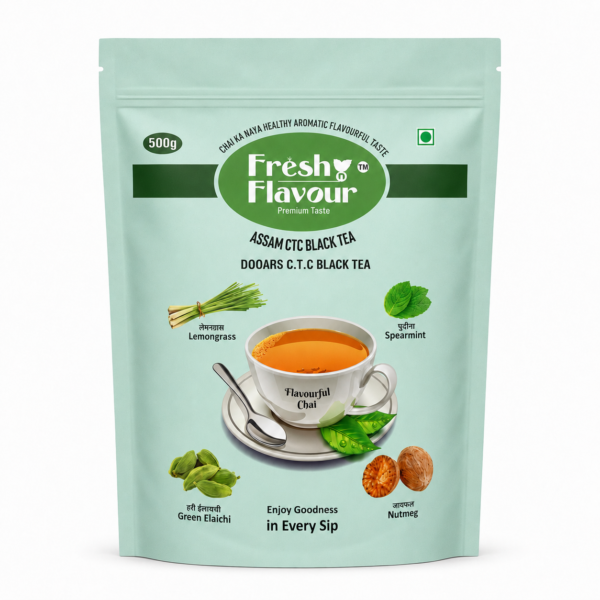
Flavourful Chai
★★★★★ (3)Flavourful chai patti online — bold Dooars CTC base blended with lemongrass, spearmint and exotic spices. Premium chai…
(incl. GST)
Shop now →CTC vs Dust vs Orthodox: Which Grade Wins?
CTC leaf wins for everyday milk chai because it brews strong and fast; orthodox leaf wins for delicate, sip-alone tea; dust grade is the weakest option and mainly used in cheap tea bags. Choosing between them depends entirely on how you drink your chai.
| Grade | Brew Strength | Best For | Shelf Life |
|---|---|---|---|
| CTC (Assam/Dooars) | Strong, quick | Milk chai, kadak cutting chai | 9-12 months |
| Orthodox (Darjeeling/Assam) | Mild, aromatic | Black tea, sip-alone tea | 6-9 months |
| Dust grade | Very strong, flat | Tea bags, budget blends | 3-6 months |
| Fresh n Flavour Flavourful | Bold, spiced | Everyday spiced masala chai | 12 months |
Why CTC Suits Indian Milk Chai
CTC’s cut surface releases colour and strength fast, which matters when you are boiling chai with milk and sugar rather than steeping delicate liquor. This is why almost every roadside tapri in India uses CTC, not orthodox leaf.
Where Orthodox Still Wins
Orthodox whole-leaf tea, like the Darjeeling Second Flush used in some Fresh n Flavour blends, brings a lighter, more layered character better suited to black tea or lightly milked cups rather than a heavy kadak brew.
How Do You Check Tea Powder Quality at Home?
You can judge good tea powder in India at home using three senses — sight, smell, and touch — without any lab equipment. Look at colour uniformity, smell for a fresh malty note, and feel for dryness.
- Colour test: Good CTC is uniformly dark brown to black, not speckled with light stems or fibre.
- Aroma test: Fresh leaf smells malty and slightly sweet; stale or old stock smells flat or musty.
- Water test: A pinch in a glass of water should sink and release colour slowly, not float as debris.
- Ingredient list test: Genuine masala chai should list actual whole spices, not “natural flavouring” as the only source of taste.
The Wikipedia entry on tea processing is a useful starting reference if you want to understand how CTC differs from orthodox manufacturing at a technical level before you shop.
Reading the Pack Honestly
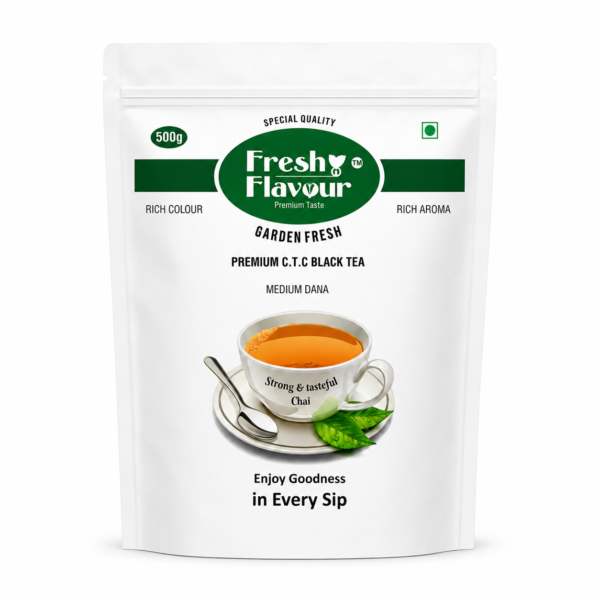
A trustworthy pack names its tea origin, states net weight clearly, and lists every spice used instead of hiding behind “spices” as a single vague word. This transparency is a strong proxy for overall quality.
Try it yourself
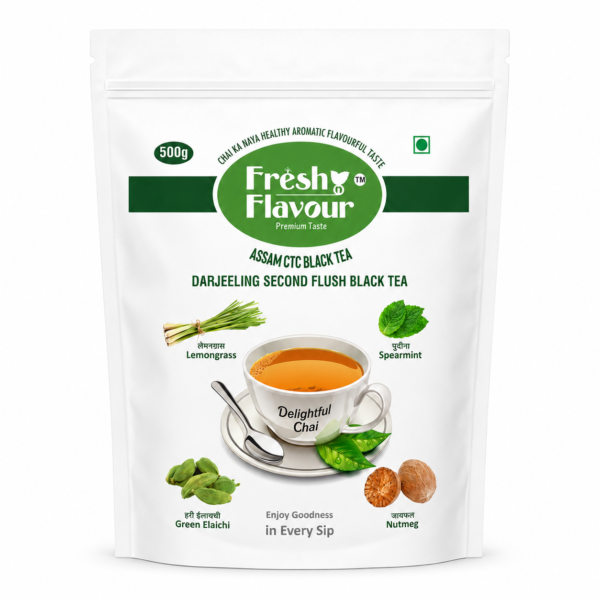
Delightful Chai
Delightful Chai Patti Online — Delightful blends Assam CTC with Darjeeling Second Flush, lemongrass & botanicals. The best…
(incl. GST)
Shop now →Why Whole Spices Matter More Than You Think
Whole spices blended directly with the leaf give a rounder, more natural chai flavour than tea dosed with artificial flavour drops, and they typically indicate a more careful, small-batch production process. This is one of the clearest quality signals available to a shopper.
The Fresh n Flavour Difference
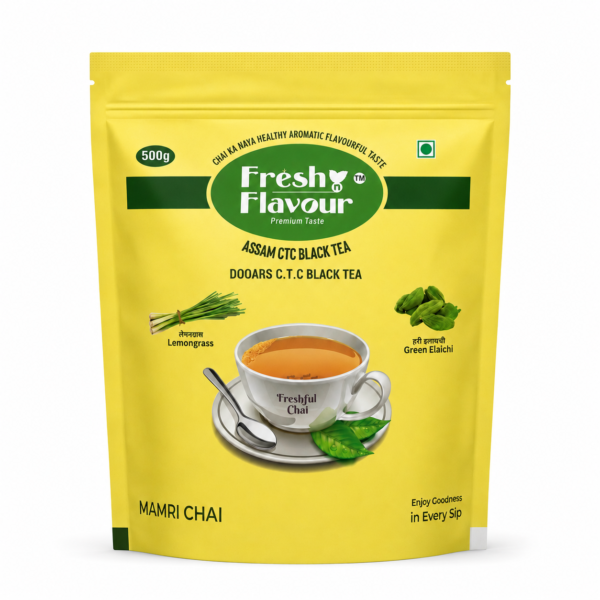
Fresh n Flavour’s Flavourful Chai combines Assam CTC and Dooars CTC with Lemongrass, Spearmint, green Cardamom and nutmeg — all whole, none powdered into an unmarked “spice mix.”
This is a detail only a brand that blends its own chai can honestly state: in Flavourful Chai, lemongrass, cardamom and mint buffer the acidity of the tea, so the boiled milk cup stays smooth without needing any added sugar to mask a sharp edge.
That single formulation choice — real whole spice, not flavour drops — is why Fresh n Flavour describes its range with the line Enjoy Goodness in Every Sip, and it is a promise the ingredient list backs up rather than just a slogan.
Small-Batch Blending vs Mass Production
Large factory-blended teas often sit in silos for months before packaging, losing aroma along the way. Fresh n Flavour blends in small batches in Ahmedabad, which means less time between blending and your cup, and a fresher final result.
Across the wider Fresh n Flavour range, this same principle repeats — fourteen distinct recipes, each built around whole spices rather than one generic base flavoured differently for each SKU.
Which Chai Should You Pick This Monsoon?
If you want an everyday spiced chai with a bold Dooars-Assam base, choose Flavourful Chai. If you want an acidity-free milk tea, Delightful Chai‘s lemongrass-cardamom-mint combination is built for that. If you want a stronger, no-frills kadak cup for rainy mornings, Strong and Tasteful Chai is the better match.
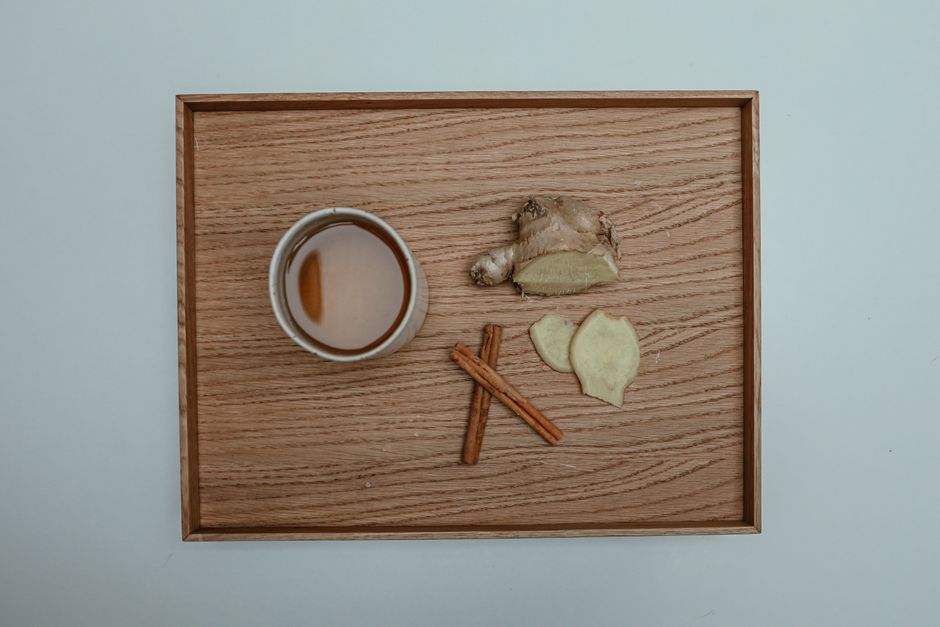
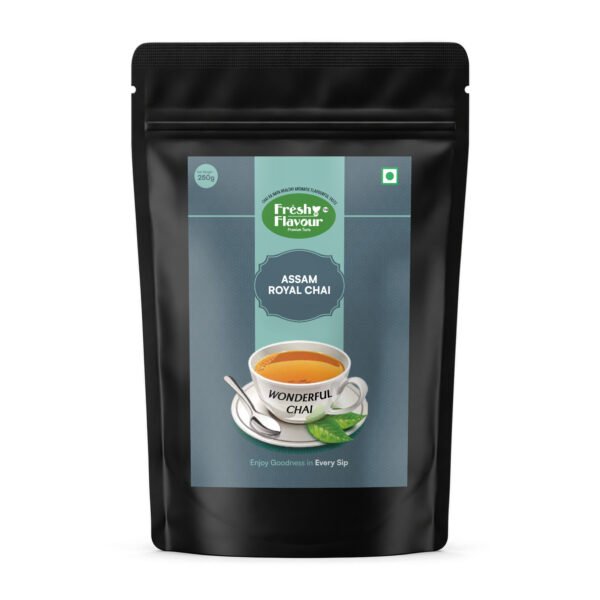
Flavourful Chai is not the right pick if you specifically want a plain, unspiced black tea — its whole-spice profile is meant to be tasted, not neutral. For that, Assam Royal Chai‘s unspiced orthodox-CTC blend suits better.
Matching Chai to This Season
With Raksha Bandhan, Independence Day and Janmashtami all landing in August, many households are already stocking up for guests and festive breakfasts. A robust, spiced everyday chai like Flavourful Chai handles both daily use and festive serving without needing a separate “special occasion” tea.
During continuous monsoon rain, a warm cutting chai break is one of the simplest daily comforts, and starting with good tea powder in India is what actually makes that comfort taste right, cup after cup.
Shop the blends in this guide
Frequently Asked Questions
Try it yourself
Assam Royal Chai
Assam chai patti online — Assam Royal is an all-Assam orthodox + CTC blend for bold, malty chai.…
(incl. GST)
Shop now →