

Table of Contents
Monsoon has hit Ahmedabad hard this August, and every second person is reaching for a hot cup to fight the damp chill. But here’s the honest question nobody asks before buying: what actually makes good chai patti good? Is it the brand name on the box, the colour of the liquor, or something deeper?
Most people pick chai patti based on habit — whatever their mother bought, whatever’s on the supermarket shelf. Few actually know what separates a mediocre blend from a genuinely well-made one. This guide breaks it down honestly, no marketing fluff.
At Fresh n Flavour, we hand-blend our chai in small batches in Ahmedabad, so we’ve seen firsthand what separates good chai patti from the rest — right down to leaf grade and spice sourcing.
What Makes Good Chai Patti in the First Place
Good chai patti starts with one simple truth: the tea leaf quality decides 70% of your cup’s taste. Everything else — milk, sugar, spices — just supports what’s already there.
Colour, Aroma, and Grain Size
Fresh, good chai patti has a deep, even brown-black colour with a slight reddish sheen. Dull, greyish leaves usually mean the tea is old or was stored poorly in humid conditions.
Smell matters too. Good chai patti should smell malty and slightly sweet when dry, not dusty or flat. If a pack has no aroma at all, the leaves have likely lost their essential oils.
Why Freshness Beats Fancy Packaging
A pretty tin does not guarantee good chai patti inside. What matters is how recently the tea was processed and how it was sealed. Monsoon humidity especially can degrade tea quality within weeks if packaging is weak.
This is why Fresh n Flavour blends in small batches rather than mass-producing months in advance. Fresher batches mean the leaf still holds its natural strength when it reaches your kettle.
Try it yourself
Delightful Chai
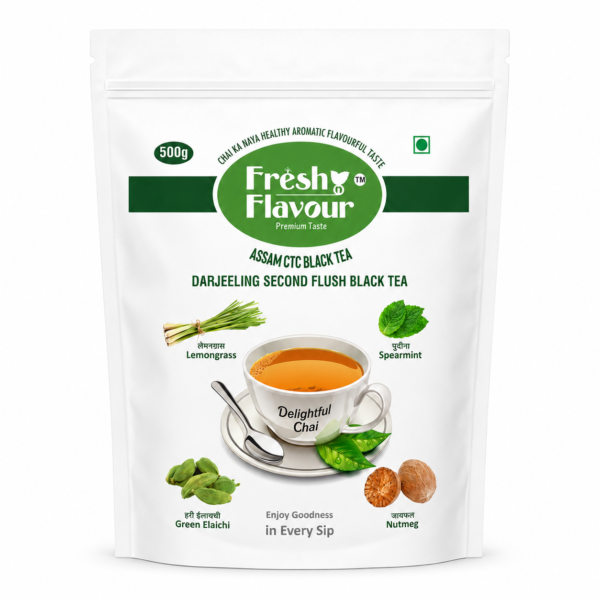
Delightful Chai Patti Online — Delightful blends Assam CTC with Darjeeling Second Flush, lemongrass & botanicals. The best…
(incl. GST)
Shop now →The Leaf Matters More Than the Label
Not all Indian tea is grown the same way, and understanding this helps you judge good chai patti at a glance.
Assam, Darjeeling, and Dooars — The Basics
Assam CTC Tea gives you that bold, malty, deep-coloured cup most Indian households associate with strong chai. Darjeeling Tea brings a lighter, muscatel sweetness that’s prized worldwide.
Historical records show Assam’s wild tea plants were first documented by British planters in the early 1800s, with detailed cultivation notes appearing later in Harold H. Mann’s 1918 study of the Assam tea industry — a fascinating look at how this region became India’s tea backbone.
Good chai patti brands often blend Assam with Darjeeling to balance strength with aroma. This is exactly the approach behind Delightful Chai, which combines Assam CTC with Darjeeling Second Flush for a cup that’s neither too harsh nor too weak.
Botanical Basics You Should Know
Camellia sinensis, the actual tea plant, was botanically documented in detail by Sir J.D. Hooker in his 19th-century survey Flora of British India, which remains a reference point for understanding Indian tea varieties even today.
Knowing the plant’s origin helps you appreciate why leaf grade and growing region genuinely change the taste in your cup — it’s not just marketing talk.
Whole Spices vs Flavour Powder
This is where most mass-market chai patti fails the good chai patti test. Cheaper blends use spice powder or artificial flavouring instead of real whole spices.
Why Whole Spices Win
Whole spices release their oils slowly during boiling, giving a rounder, more natural flavour. Powder dumps flavour instantly but fades fast and can taste artificial or bitter.
Cardamom pods, Ginger root, and Nutmeg shavings — used whole — are what separate a good chai patti blend from an average one.
Colonial-era spice grinding traditions, documented in the 1880 book The Indian Cookery Book, describe how Indian households hand-ground spices fresh for each batch rather than storing them powdered — a practice that preserved potency far longer.
The Sharpness Problem Nobody Talks About
Here’s an information gap most brands won’t mention: milk tea can turn sharp and heavy in taste, especially with strong Assam-only blends. This happens due to tannins reacting with milk proteins during a long boil.
Fresh n Flavour‘s Delightful and Flavorful blends solve this directly. Both include Lemongrass, cardamom, mint, and nutmeg — a combination that naturally balances the tannin-heavy notes and reduces that acidic aftertaste many people complain about.
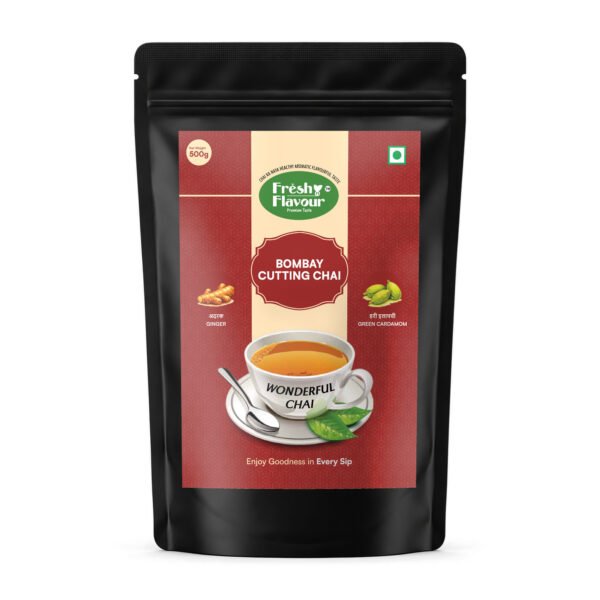
This is a genuine formulation choice, not a marketing gimmick. If you’ve ever found a regular cutting chai too heavy or sharp, this blend logic is worth trying, especially during Raksha Bandhan and Independence Day chai sessions with family this month.
Try it yourself
Delightful Chai
Delightful Chai Patti Online — Delightful blends Assam CTC with Darjeeling Second Flush, lemongrass & botanicals. The best…
(incl. GST)
Shop now →CTC vs Orthodox: A Real Comparison
Understanding processing methods is key to judging good chai patti. CTC (Crush, Tear, Curl) and Orthodox are the two dominant styles in India, and each suits different chai styles.
| Factor | CTC Tea | Orthodox Tea |
|---|---|---|
| Strength | Bold, strong, quick brew | Milder, more nuanced |
| Best For | Milk tea, kadak chai | Black tea, light chai |
| Brew Time | 2-3 minutes | 4-5 minutes |
| Appearance | Small granular pellets | Long twisted leaves |
| Example Blend | Delightful Chai, Strong & Tasteful | Assam Royal Chai |
If you love the classic milky, spiced Indian chai experience, CTC is what makes good chai patti feel authentic. Orthodox suits those who prefer a subtler, black-tea leaning cup.
How to Read a CTC Pack Like a Pro
Look for uniform grain size, a slightly reddish-brown hue, and no dust at the bottom of the pack. Dust or excessive fines usually indicate lower-grade tea used as filler.
- Check the grain: Even, small pellets mean consistent processing.
- Smell before brewing: Malty aroma signals freshness.
- Look at the base tea: Assam or Darjeeling origin should be clearly stated.
- Avoid excess dust: Too much fine powder often means lower quality leaf.
These small checks are exactly how you separate good chai patti from an average supermarket pack, even before you brew a single cup.
Which One Should You Pick
Not every good chai patti suits every person. Here’s an honest breakdown based on what you actually need.
If you want a balanced, acidity-free everyday cup, go with Delightful Chai. Its Assam-Darjeeling base with lemongrass and cardamom is smooth yet full of flavour.
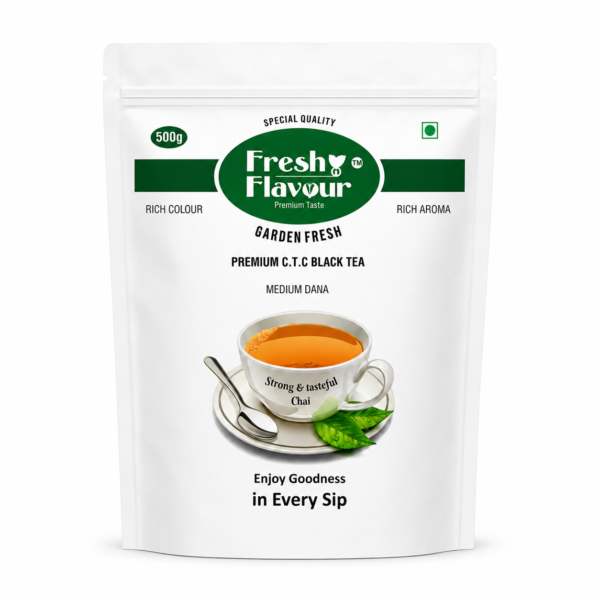
If you want the strongest, kadak morning cup with no frills, Strong & Tasteful Chai is built for that — straight Assam and Darjeeling CTC without added spice complexity.
If monsoon evenings call for something warming this season, Tulsi Ginger CTC Chai combines Tulsi and ginger, a pairing long loved in Indian homes during weather changes like this.
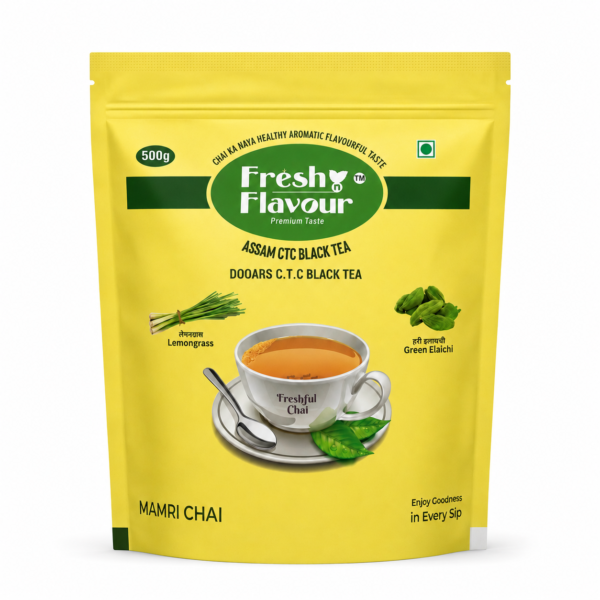
If you want an acidity-free chai, choose Delightful or Freshful over a straight Assam-only blend — lemongrass, cardamom and mint buffer the acidity of the tea.
Whichever you pick, remember that good chai patti is a personal fit, not a one-size answer. Start with a smaller pack if you’re unsure, and adjust from there.
The Fresh n Flavour range was built around this idea — 14 distinct recipes so you’re not stuck with one flavour profile for months, unlike most single-blend brands on the market.
Enjoy Goodness in Every Sip isn’t just a tagline for us — it’s the standard we hold every batch to, from leaf sourcing to spice grinding.
Final Thoughts on Good Chai Patti
Good chai patti isn’t about the flashiest packaging or the loudest advertising. It comes down to leaf quality, spice freshness, and thoughtful blending that respects both flavour and your everyday cup.
Next time you’re shopping, check the grain, smell the pack, and ask what’s actually inside — whole spices or flavour powder. That’s the real test of good chai patti.
This monsoon, as Raksha Bandhan and Janmashtami approach, a good cup of chai shared with family matters more than ever. Choose one that’s honestly made, not just heavily marketed.
Shop the blends in this guide
Frequently Asked Questions
Try it yourself
Delightful Chai
Delightful Chai Patti Online — Delightful blends Assam CTC with Darjeeling Second Flush, lemongrass & botanicals. The best…
(incl. GST)
Shop now →