

Table of Contents
If you have ever brewed your regular masala chai in a new city and wondered why it suddenly tastes dull, the answer is probably your water, not your recipe. Choosing the right chai patti for hard water can be the difference between a flat, muddy cup and a bold, aromatic one that tastes like it should. In late monsoon, as households across India shift from cooling drinks back to hot chai during the day’s remaining humidity, this is exactly the season when hard water complaints spike.
Millions of Indian homes run on borewell or municipal water with high mineral content, and most people blame the tea leaves first. In reality, the minerals in hard water are quietly sabotaging your brew before the chai patti even gets a fair chance.
Fresh n Flavour is a premium chai brand hand-blended in Ahmedabad, and this is one of the most common questions our customers ask: why does the same chai patti taste different from city to city? Let’s break down the science, and the fix. (as recognised by Assam tea heritage).
Why Does Hard Water Make Chai Taste Flat?
Hard water contains high levels of calcium and magnesium ions, which bind with the tannins and polyphenols in tea leaves during brewing. This chemical reaction mutes the natural astringency and colour of chai, leaving you with a flat, dull-tasting cup even when using good quality chai patti.
The Mineral-Tannin Reaction
Tannins are responsible for the brisk, slightly bitter edge that makes chai taste alive. When calcium and magnesium ions latch onto these tannins, they form insoluble compounds that settle at the bottom of your pot instead of infusing into the liquid.
This is also why hard water chai often develops a thin, oily film on top, and why the colour looks paler than expected despite using enough Assam CTC Tea.
Why Some Chai Patti Suffers More Than Others
Delicate, lightly oxidised teas lose the most character in hard water because they rely on subtle aromatic compounds that get overwhelmed by minerals. Bold, high-tannin CTC blends fare much better because they have enough strength to push through the interference.
This is exactly why chai patti for hard water needs to be chosen deliberately, rather than picking whatever is available on the supermarket shelf.
Try it yourself
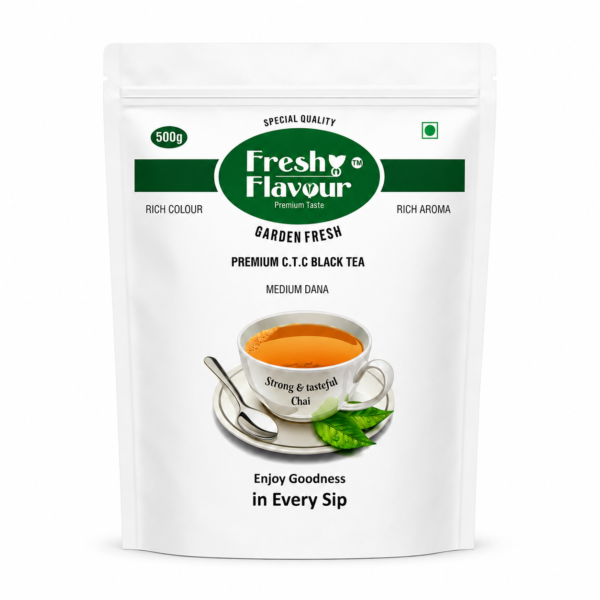
Strong & Tasteful Chai
★★★★★ (14)Kadak chai patti online — Strong & Tasteful delivers bold Assam CTC black tea for strong chai lovers.…
(incl. GST)
Shop now →What Is the Best Chai Patti for Hard Water?
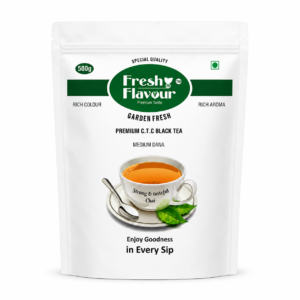
The best chai patti for hard water is a bold, full-bodied CTC blend with high tannin content, strong enough to maintain colour, aroma and taste despite mineral interference. Fresh n Flavour’s Strong & Tasteful Chai is built precisely for this need.
Why Strong & Tasteful Chai Works So Well
This blend uses garden-fresh premium Assam and Darjeeling CTC in a medium dana cut, chosen specifically for robust liquoring strength. The larger, denser leaf particles hold more tannin and colour pigment, meaning they still deliver a rich cup even when brewed in mineral-heavy water.
We hand-blend this chai in small batches in Ahmedabad, where many households already deal with hard, borewell-fed water. That local reality directly shaped why this particular blend leans bold rather than delicate.
What Makes a Chai Patti Naturally Hard-Water Resistant
- High tannin CTC leaf – stronger astringency survives mineral binding better
- Medium to bold dana cut – more surface area releases colour faster during boiling
- Blended black teas – combining Assam and Darjeeling balances strength with some aromatic lift
- No delicate florals – subtle green or white tea notes disappear entirely in hard water, so bold blends are safer
CTC vs Orthodox: Which Handles Hard Water Better?
CTC tea generally performs better than orthodox tea in hard water because its crushed, torn and curled processing releases tannins and colour faster and more completely during a short, hard boil, which suits the typical Indian stovetop chai method.
| Factor | CTC Tea | Orthodox Tea |
|---|---|---|
| Tannin release speed | Fast, high yield | Slower, gentler |
| Performance in hard water | Strong, resilient | Weakens, flattens easily |
| Best brew method | Boiled with milk and spices | Steeped gently, black or light milk |
| Ideal for | Kadak masala chai, tapri-style cutting chai | Delicate single-origin sipping tea |
| Fresh n Flavour example | Strong & Tasteful Chai, Bombay Cutting Chai | Assam Royal Chai (partial orthodox blend) |
If your home runs on borewell or heavily chlorinated municipal water, a CTC-forward chai patti for hard water will consistently outperform a purely orthodox leaf, especially for the strong milk-boiled style most Indian households prefer.
Try it yourself
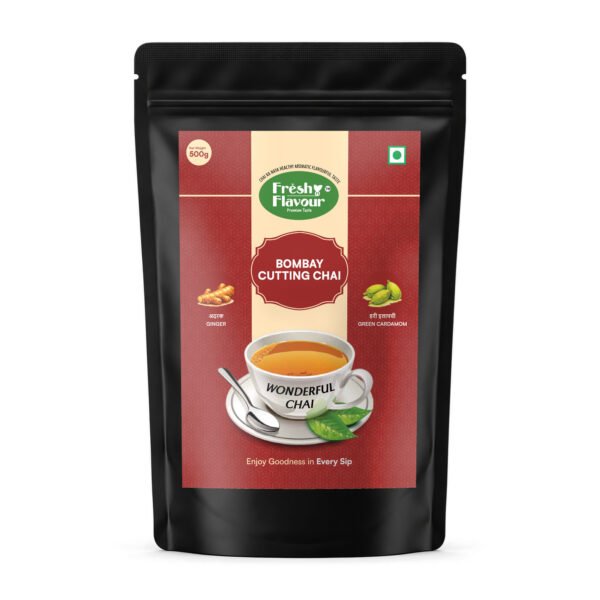
Bombay Cutting Chai
★★★★★ (5)Bombay Cutting chai patti online — authentic Mumbai tapri-style blend with ginger, cardamom & bold CTC base. Premium…
(incl. GST)
Shop now →How Do You Fix Flat Chai From Hard Water?
You can fix flat chai from hard water by boiling slightly longer, using a stronger chai patti, adding a touch more leaf quantity, and layering in aromatic spices like ginger and cardamom that cut through mineral dullness.
Adjust Your Brewing Ratio
Try increasing your chai patti quantity by roughly 10 to 15 percent compared to what you use with soft or filtered water. This compensates for the tannins lost to mineral binding, restoring colour and body to the final cup.
Historical spice-blending records from 19th century India, as documented in The Indian Cookery Book (1880) by ‘A Thirty-Five Years Resident’, describe cooks adjusting spice and leaf ratios by hand based on local water and climate — a practice that still holds true today.
Bring in Aromatic Spices
Ginger and Cardamom add sharp, volatile aromatics that hard water minerals cannot easily neutralise, unlike tannins. This is why ginger-forward blends like Bombay Cutting Chai often taste more consistent across different water types.
A generous pinch of freshly crushed cardamom pods, added right at the boil, noticeably lifts the aroma of an otherwise flat cup.
Consider Your Boiling Technique
Rather than boiling harder and faster, extend the simmer time by a minute or two on low-medium heat. This slower approach gives tannins more opportunity to extract before minerals can fully bind them.
If you have a water filter or RO system at home, mixing filtered water with your regular tap water in a 1:1 ratio is a simple middle-ground fix that many Ahmedabad and Gujarat households already use during the humid late monsoon months.
Which Chai Patti Should You Pick for Your Water Type?
If you deal with hard, mineral-heavy water daily, Strong & Tasteful Chai is the most dependable choice, since its bold medium dana CTC is designed to hold up under mineral interference.

If you want a ginger-forward cup that also cuts through flatness with aromatics, Bombay Cutting Chai is an excellent tapri-style alternative with real ginger and cardamom already built in.
If a lighter cup, not strength, is what you’re after — perhaps you have soft water but prefer a softer taste — Delightful Chai or Freshful Chai are better suited, since both are acidity-free blends built on lemongrass, mint and nutmeg rather than extra strength.
This is not a one-size-fits-all decision. A delicate, single-estate style blend is genuinely the wrong pick if your home runs on hard borewell water, no matter how premium the tea garden. Match the chai patti to your water, not just your taste preference on paper.
Shop the blends in this guide
Frequently Asked Questions
Try it yourself
Bombay Cutting Chai
★★★★★ (5)Bombay Cutting chai patti online — authentic Mumbai tapri-style blend with ginger, cardamom & bold CTC base. Premium…
(incl. GST)
Shop now →