

Table of Contents
- Understanding Chai Patti Price Variation Across India
- Way 1: The Grade and Flush of Tea Leaves Impact Chai Patti Price
- Way 2: Authentic Spices Determine Real Chai Patti Price Value
- Way 3: Hand-Blending Craftsmanship Justifies Premium Chai Patti Price
- Way 4: Sourcing and Freshness Explain Why Chai Patti Price Matters
- Way 5: Brand Reputation and Testing Standards Behind Chai Patti Price
The Indian chai market is flooded with options, but understanding the real ways chai patti price in India reflects quality can transform how you buy and brew your daily cup. Whether you’re shopping at your local grocery store, ordering chai online, or exploring premium blends, the price tag tells a deeper story about sourcing, processing, and care. This guide reveals the 5 proven ways chai patti price correlates directly with the quality you’ll experience with every brew.
In June 2026, as India braces for the monsoon season with temperatures soaring between 38-45°C, the demand for lighter, aromatic chai blends has never been higher. Yet many tea drinkers still purchase budget blends without understanding what they’re missing. Premium chai patti brands like Fresh n Flavour have spent years perfecting their recipes and sourcing, and their pricing reflects genuine quality that budget options simply cannot match.
Let’s explore the 5 proven ways chai patti price in India acts as a quality indicator, so you can make informed decisions and invest in chai that truly delivers on taste, aroma, and strength.
Understanding Chai Patti Price Variation Across India
Before diving into the specific ways chai patti price in India reflects quality, it’s important to understand why prices vary so dramatically. Walk into any Indian supermarket, and you’ll find chai patti ranging from ₹30 per 500g to ₹400 per 250g. This massive variation isn’t random—it’s driven by fundamental differences in sourcing, processing, and brand standards.
Why Chai Patti Prices Differ So Much
The chai industry in India operates across multiple tiers. Budget blends are often made from tea dust and fannings (leftover fragments from premium tea processing), mixed with powdered spices that lost their essential oils months ago. Mid-range options use decent CTC tea but may cut corners on spice quality or blending consistency. Premium chai patti, however, starts with carefully selected whole tea leaves and freshly ground whole spices.
Understanding these tiers helps you decode chai patti price in India and recognize when you’re truly paying for quality versus marketing hype. The ways chai patti price reflects quality become obvious once you know what to look for.
Try it yourself
Delightful Chai
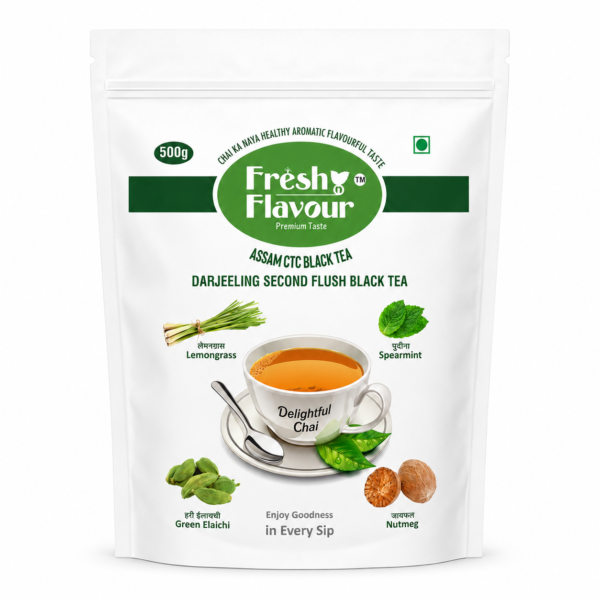
Delightful Chai Patti Online — Delightful blends Assam CTC with Darjeeling Second Flush, lemongrass & botanicals. The best…
(incl. GST)
Shop now →Way 1: The Grade and Flush of Tea Leaves Impact Chai Patti Price
The single biggest factor driving chai patti price in India is the grade and flush of the tea leaves used. This is the foundation upon which all quality is built. Not all black tea is created equal, and understanding this difference is one of the most important ways chai patti price justifies its cost.
Understanding Tea Grades and Flushes
Indian tea comes in different grades based on leaf size, appearance, and the harvest season. First Flush teas (harvested in spring) command premium prices because they’re more delicate and flavorful. Second Flush teas are equally prized for their muscatel sweetness. In contrast, lower grades use broken leaves, dust, and fannings—the leftovers from sieving whole leaf teas. These fragments have less flavor, less aroma, and brew into a muddy, one-dimensional cup.
Assam CTC tea and Darjeeling Second Flush are the gold standards for premium chai. CTC (Crush, Tear, Curl) processing creates uniform, quick-brewing leaves perfect for milk chai. Yet not all CTC is equal—premium CTC from reputable gardens costs significantly more than bulk CTC from unknown sources.
When you buy premium chai patti, you’re paying for whole leaf CTC from trusted estates, not dust. This is why Fresh n Flavour‘s Delightful Chai costs more than generic blends—it blends premium Assam CTC with Darjeeling Second Flush, the two most prized black teas in India. The chai patti price reflects this deliberate choice of superior leaf grades.
How Leaf Grade Affects Flavor and Aroma
Premium whole leaf chai brews with a rich, malty aroma and deep mahogany color within 2-3 minutes. Budget tea dust requires longer brewing and never achieves that signature aroma. As documented in Harold Mann’s 1918 study of Assam tea, the earliest planters recognized that leaf size and quality directly determine the character of the final brew—a principle that remains true today.
This is precisely one of the ways chai patti price in India acts as a quality proxy: higher price signals investment in premium leaf grades that deliver superior sensory experience.
Way 2: Authentic Spices Determine Real Chai Patti Price Value
The second major way chai patti price in India reflects quality lies in the spices used. Most budget chai patti contains spices that are ground months in advance, stored poorly, and have lost their essential oils and potency. Premium blends use whole spices, freshly ground or added whole to preserve their flavor compounds.
Whole Spices vs. Powdered Spices
Green cardamom, fresh ginger, and nutmeg are the holy trinity of Indian chai. When these are used fresh and whole, they create the aromatic, warming cup that defines authentic masala chai. Budget chai patti often uses old cardamom powder that tastes like sawdust, imitation spice flavoring, or artificial warming agents.
Sourcing authentic spices costs more—real cardamom pods from Kerala estates are expensive, ginger must be fresh-dried to retain its bite, and nutmeg must be hand-ground just before blending. These practices drive up chai patti price in India, but the flavor difference is immediately obvious to anyone who’s tasted both.
Why Freshness Matters in Spice Blends
Spice essential oils are volatile compounds that evaporate over time. A cardamom pod ground 6 months ago has lost 60-70% of its aromatic compounds. This is why Fresh n Flavour hand-blends chai patti in small batches in Ahmedabad, ensuring spices are added at peak potency. The chai patti price reflects this commitment to freshness—it’s literally a frozen moment of aromatic perfection, captured when spices are at their most flavorful.
One of the most important ways chai patti price in India indicates quality is the presence of whole spices visible in the blend. If you can see entire cardamom pods, fresh ginger pieces, or nutmeg flakes, you’re looking at premium chai patti that will deliver authentic taste.
Way 3: Hand-Blending Craftsmanship Justifies Premium Chai Patti Price
Industrial-scale chai patti production uses machines to dump tea leaves and spices into massive mixers, creating inconsistent blends with uneven spice distribution. Hand-blending, by contrast, is labor-intensive work that requires expertise and care. This is one of the most overlooked ways chai patti price in India reflects true quality—the human skill involved.
The Art and Science of Chai Blending
Creating a balanced chai blend is an art. The ratio of tea to spices, the size of tea leaf cuts, the timing of spice addition, and the order of layering all matter. A master blender tastes hundreds of samples, adjusts recipes season by season, and ensures consistency batch after batch. This expertise cannot be replicated by machines.
When you buy premium chai patti from a brand that hand-blends, every packet is crafted with attention to detail. Fresh n Flavour employs this method across their entire 14-blend range, which is why each chai—from Delightful Chai to Chocolate CTC Chai to Ayurvedic CTC Chai—tastes balanced, aromatic, and intentional.
Consistency Across Batches
Industrial brands struggle to maintain consistency because machines can’t adapt to seasonal variations in leaf color, spice moisture, or aroma intensity. Hand-blending allows adjustments in real-time. This consistency is something home blenders and budget brands cannot achieve, which is a key reason why chai patti price in India rises with smaller-batch, hand-crafted producers.
You experience this consistency the moment you open a packet of premium chai patti—the aroma is immediate and uniform, spices are evenly distributed, and every cup tastes like the last. This reliability is what justifies the premium chai patti price.
Try it yourself
Delightful Chai
Delightful Chai Patti Online — Delightful blends Assam CTC with Darjeeling Second Flush, lemongrass & botanicals. The best…
(incl. GST)
Shop now →Way 4: Sourcing and Freshness Explain Why Chai Patti Price Matters
The fourth way chai patti price in India reflects quality is freshness and traceability. Budget chai patti sits in warehouses for months or years. Premium chai patti is produced in smaller quantities and reaches customers within weeks of blending. This freshness dramatically affects taste, aroma, and colour.

Direct Estate Relationships
Premium chai brands develop direct relationships with tea estates in Assam and Darjeeling, allowing them to source the best leaves at harvest. Budget brands buy whatever is cheapest on the open market—often tea that’s been sitting in middleman warehouses, losing quality. These direct relationships cost more upfront, which translates to higher chai patti price in India, but customers get fresher, better-tasting chai.
Fresh n Flavour sources premium Assam and Darjeeling CTC specifically for their blends, ensuring every batch meets their standards. This sourcing discipline is reflected in the chai patti price, but also in the immediate freshness you smell when you open the packet.
Oxygen Absorption and Storage
Tea leaves oxidize over time, especially if stored in poor conditions. Premium chai patti brands use high-barrier packaging and store blends in cool, dry conditions to slow oxidation. Budget chai patti is often stored in basic paper or thin plastic, allowing moisture and oxygen to degrade quality. This investment in proper storage is another way chai patti price in India reflects the care taken to preserve quality.
When June’s heat hits India at 38-45°C, proper storage becomes critical. Premium chai patti brands invest in climate-controlled storage; budget options deteriorate in summer heat. This seasonal reality is built into the chai patti price structure—you’re paying for protection from environmental damage.
Way 5: Brand Reputation and Testing Standards Behind Chai Patti Price
The final and perhaps most significant way chai patti price in India reflects quality is brand reputation and rigorous testing standards. Established brands with decades of credibility invest heavily in quality assurance. They test for microbial contamination, pesticide residues, and consistency. Budget brands often skip these tests entirely.
Quality Testing and Certification
Premium chai patti brands conduct lab testing at multiple stages—on raw tea leaves, on spices, and on the final blend. They verify that products meet safety standards and deliver promised flavor profiles. This testing costs money, and those costs are embedded in the chai patti price. Budget brands don’t perform these tests, which is one reason their chai patti price is so low—they’re saving on quality assurance.
Beyond testing, premium brands stand behind their products with customer guarantees. If you open a packet of Fresh n Flavour chai and find it inferior, the brand replaces it. This customer commitment requires confidence in product quality, which only emerges from rigorous standards. It’s one of the most important ways chai patti price in India signals trustworthiness.
Master Blender Expertise and Recipe Development
Building a chai recipe takes years. Premium brands employ tea tasters and chai experts who develop, test, and refine blends over months. They taste hundreds of variations, consult ingredient experts, and study how flavors interact. This expertise is irreplaceable and expensive. Budget brands buy commodity blends or copy existing recipes without this depth of development.
Fresh n Flavour‘s 14 distinct chai varieties represent years of recipe development—each one crafted to deliver specific flavor profiles and aromas. The chai patti price reflects this investment in expertise and innovation. You’re not just buying tea and spices; you’re buying the brand’s accumulated knowledge and commitment to excellence.
Why These Five Ways Matter for Your Purchase Decision
Understanding these 5 proven ways chai patti price in India reflects quality empowers you to make smarter purchasing decisions. Instead of automatically reaching for the cheapest option, you can evaluate what you’re getting: Are the tea leaves whole leaf CTC? Are spices fresh and whole? Is the brand hand-blending in small batches? Does the brand invest in testing and quality assurance?
When you ask these questions, chai patti price becomes less about cost and more about value. Premium brands charge more because they deliver more. They source better ingredients, blend with care, test rigorously, and stand behind their products. The chai patti price is an investment in taste, quality, and the entire experience of brewing and sipping chai.
This June, as you navigate summer heat and monsoon anticipation, choose chai patti that reflects quality across these five dimensions. Your daily cup deserves better than budget blends. Experience the difference that comes from understanding the real ways chai patti price in India tells the quality story—and treat yourself to chai that delivers genuine goodness in every sip.
For those ready to upgrade their chai experience, Delightful Chai by Fresh n Flavour exemplifies all five ways chai patti price reflects quality. It blends premium Assam CTC with Darjeeling Second Flush, hand-blended with whole spices, stored fresh, tested rigorously, and backed by a brand built on chai excellence. Try it and taste the difference that quality makes.
Shop the blends in this guide
Frequently Asked Questions
Try it yourself
Delightful Chai
Delightful Chai Patti Online — Delightful blends Assam CTC with Darjeeling Second Flush, lemongrass & botanicals. The best…
(incl. GST)
Shop now →